
Samaná is located on the Samaná Peninsula on the northeast coast of the Dominican Republic — a region that is dramatically different from the tourist corridors of Punta Cana. This is jungle-lush DR: rainforests, coconut plantations, rolling mountains, white-sand beaches, cascading waterfalls, and one of the world's most extraordinary whale watching experiences. It is estimated there are 6 million palm trees on the Samaná Peninsula alone.
The Dominican Republic occupies the eastern two-thirds of Hispaniola — the island it shares with Haiti — and has the highest mountain peak in the West Indies at over 10,000 feet. Christopher Columbus founded the first permanent European settlement here around 1493, landing at Rincón Beach, which remains a beautiful spot today. The Samaná Affair of the 19th century helped establish the boundaries between Haiti and the D.R. that exist today.
Unlike the resort infrastructure of Punta Cana, the Samaná Peninsula offers a more authentic Dominican experience — independent restaurants and local hotels rather than all-inclusive complexes, and natural attractions that draw eco-tourists, birdwatchers, and whale watchers from around the world.
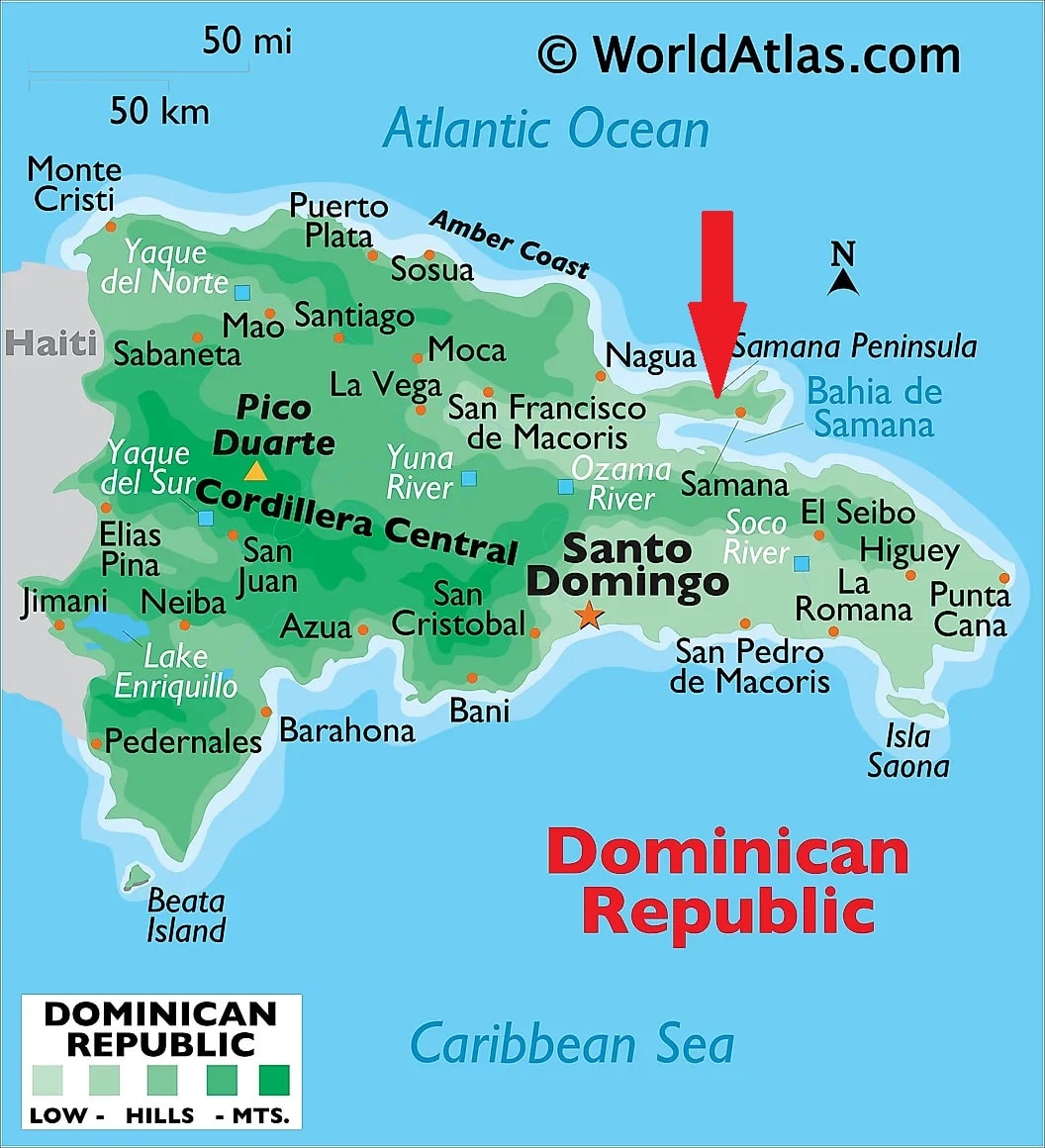
Credit: worldatlas.com
Check out our Samaná Excursions.
Know Before You Go
Hot Tip
Samaná, Dominican Republic – Quick Facts
Where You Dock in Samaná, Dominican Republic
Pier locations and what's available at each terminal.
The Port of Samaná is on the northeast coast of the Dominican Republic — ships anchor offshore and passengers are tendered to the mainland. There are two tender docks:
⚓ Embat Dock (Samaná Tender Dock) — Main Pier
The primary tender landing with tourist information, private tour booking, taxi service, restrooms, and a large map. About a 10-minute walk to the center of town along a flat, paved waterfront promenade.
⚓ Dock Moto Marina Club
The secondary tender dock — also has tour operators and taxis on site. About a 5-minute walk to the town center.
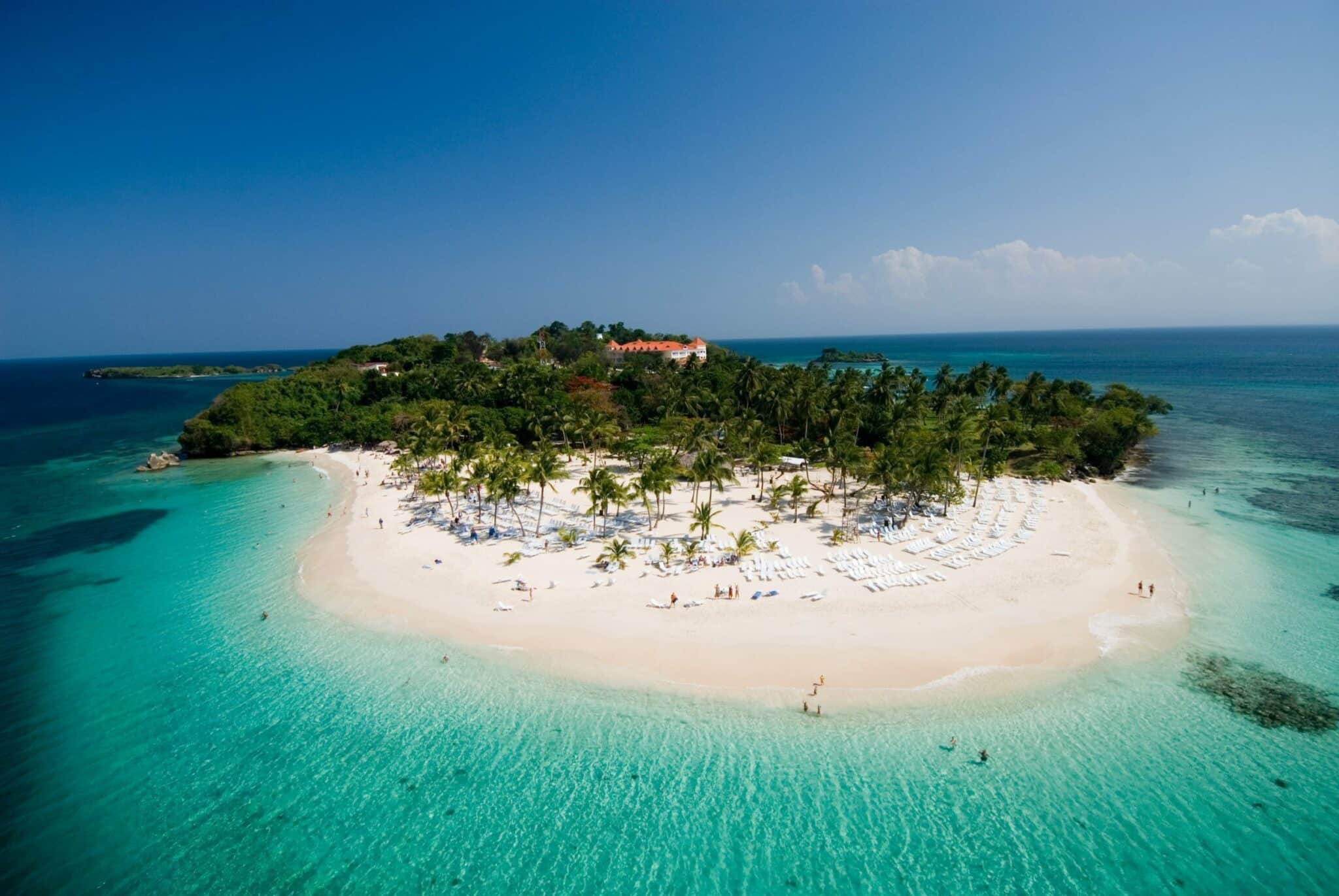
Cayo Levantado — Credit: godominicanrepublic.com
Getting Around Samaná, Dominican Republic
Transportation options once you're ashore.
🚶 Walking
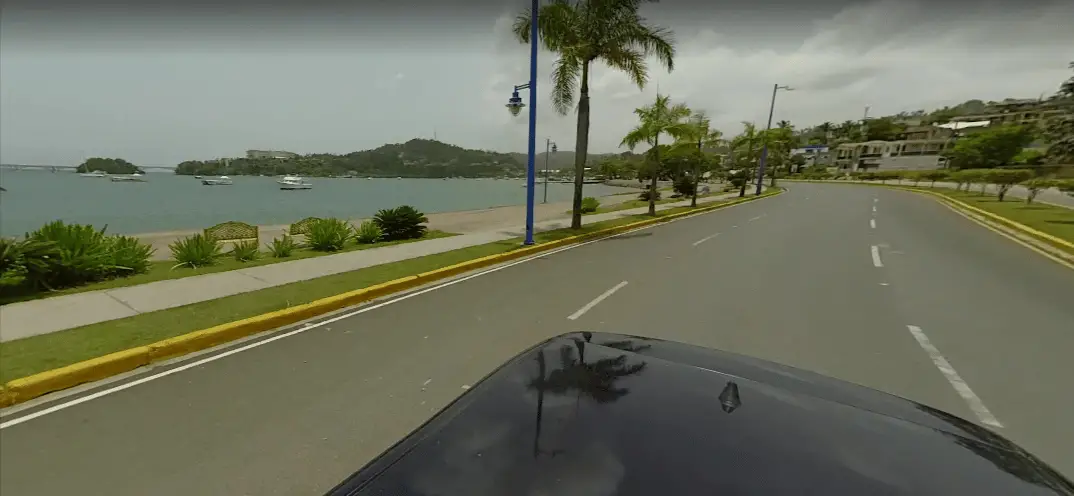
A flat, paved promenade runs along the shore from both docks into the city center — lined with benches, palm trees, small shops, and harbor views. The walk takes about 10 minutes from Embat Dock or 5 minutes from Dock Moto. Samaná's town center is compact and walkable once you arrive.
🚕 Taxis
Available at both docks. Use only licensed taxis — identifiable by a sign on the roof of the car. Know the Spanish name of your destination as most drivers do not speak English. Taxis are the best option for reaching beaches, El Limón waterfall, and Los Haitises National Park.
Recommended services: Samaná Airport Transfer & Taxi (PAYANO) · Servicio de Taxi JJ (24-hour) · OPTIMA Taxi Samaná (also offers sightseeing tours)
🚗 Car Rental
Xamana Rental Car is the closest agency to the docks. A valid state-issued driver's license is required — no international permit needed. Driving is on the right; speeds are in kilometers; trucks have right of way over cars. Main roads are reasonably maintained but secondary roads are not. Do not cross into Haiti — this voids your insurance. For a short port day, a taxi tour may be more practical than renting.
🛵 Scooter Taxis (Motoconchos)
Things To Do in Samaná, Dominican Republic
Make the most of your time ashore.
🎯 Samaná's greatest attractions are entirely natural — whales, waterfalls, national parks, and some of the Caribbean's most beautiful beaches:
Humpback Whale Watching (January–March) — One of the world's premier whale watching experiences. Each year between January and March, over 2,500 humpback whales travel to Samaná Bay to mate and give birth. Book this excursion for a chance to see these 40-ton creatures up close. Outside of whale season, visit the Whale Museum (below) for an equally compelling experience.
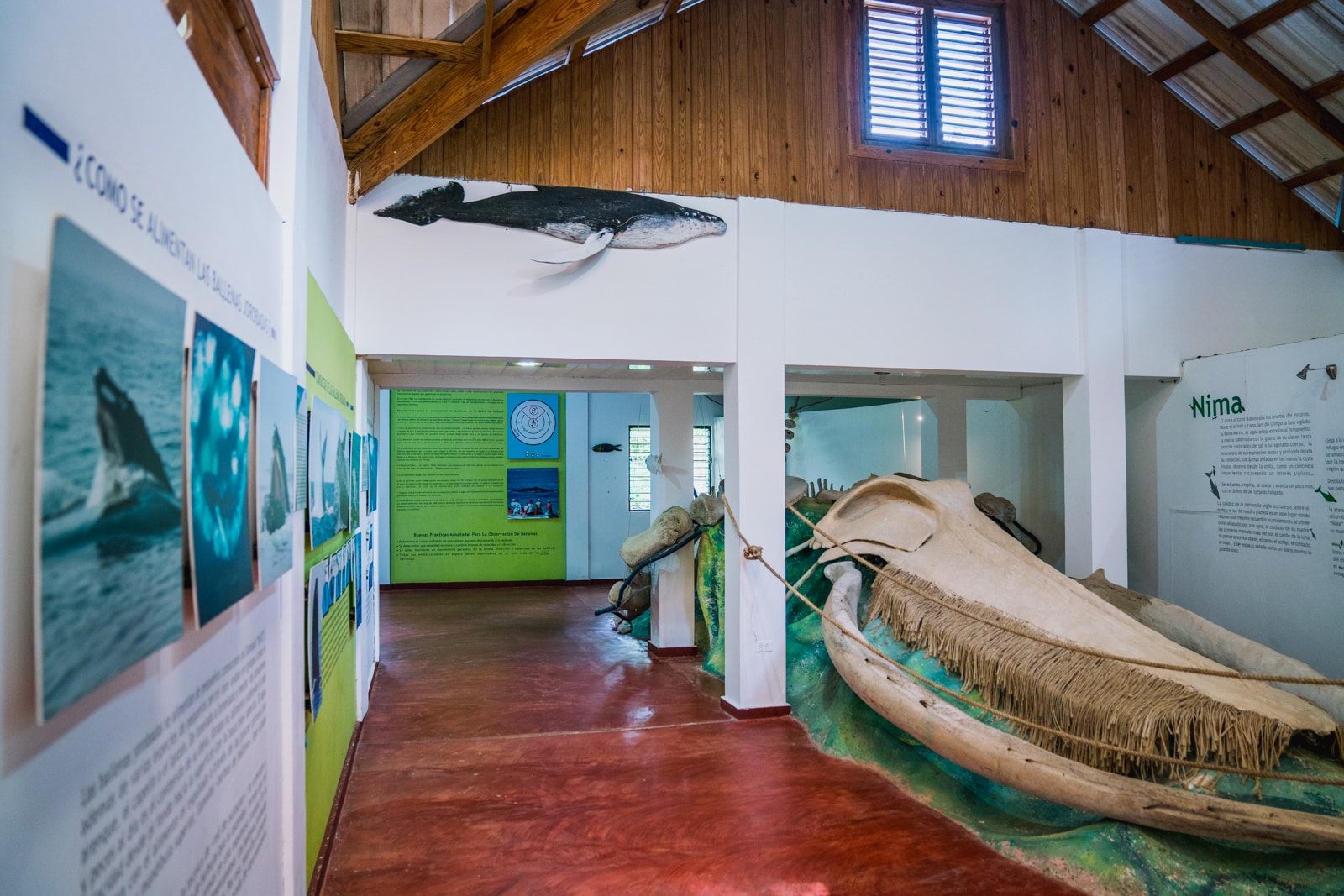
Whale Museum (Museo de las Ballenas) — 20-minute walk from the pier along the waterfront — a fascinating museum and nature center dedicated to the humpback whale, featuring the complete skeleton of a 40-foot specimen. English-speaking guides available. Admission is only $3 per person — one of the best value attractions in the Caribbean.
Credit: godominicanrepublic.com
Los Haitises National Park — A 618-square-mile protected national park with dramatic limestone rock formations rising from the sea, mangrove forests, caves with Taíno petroglyphs, and one of the last intact rainforests in the Dominican Republic — part of which was used as a filming location for Jurassic Park. Kayak through the mangroves, take a boat excursion through the formations, or watch for endangered bird species in one of the Caribbean's most biodiverse sanctuaries. See tours and excursions to Los Haitises.
Beaches & Outdoors in Samaná, Dominican Republic
The best beaches, parks, and outdoor experiences for cruise passengers.
🏖️ The Samaná Peninsula has some of the most beautiful and least commercialized beaches in the Dominican Republic:
Playa Cayacoa
The main beach in Samaná, in the heart of the city near the Grand Bahia Príncipe Cayacoa hotel — also popular with locals. A bridge extends into the bay to Puente Peatonal, a small island with hidden smaller beaches. About 1.4km end to end with unique bay views throughout.
Rincón Beach
About an hour's drive from the port — consistently listed among the Caribbean's ten best beaches. Three miles of picture-perfect white sand and palm trees with warm, manageable waves. A few restaurants nearby and the authentic fishing village of Las Galeras is a short drive away. Worth the journey for those with a full port day.
Cayo Levantado
About 3 miles offshore — a stunning island with white sand beaches, turquoise water, restrooms, beach loungers, water equipment rentals, and food and drink. The public side of the island is accessible to cruise passengers via ship-sponsored tender only. One of the most beautiful private island experiences in the Dominican Republic.
Shopping in Samaná, Dominican Republic
Where to shop and what to look for.
Malecón Open-Air Market
Whenever cruise ships are in port, vendors set up open-air tents along the Malecón waterfront promenade selling handmade jewelry, local crafts, and artwork. The most convenient and accessible shopping right from the dock — browse while walking between the pier and the town center.
Plaza Pueblo Príncipe — 14 min walk along waterfront
Souvenirs, jewelry, and swimsuits in a colorful collection of historically painted shops, plus a pharmacy. A pleasant and compact shopping destination just past the main waterfront stretch.
Henzom Jewelry Store — 6 min walk along waterfront
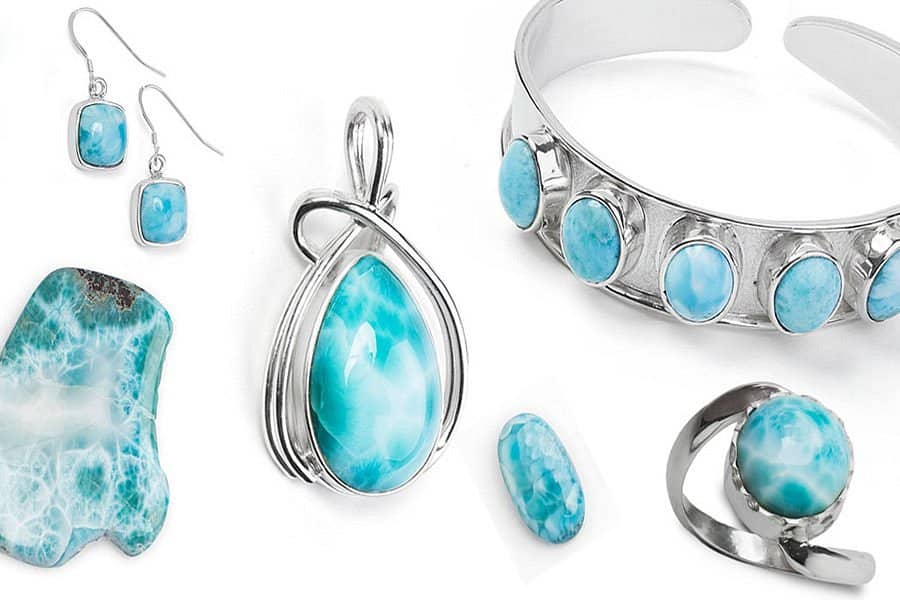
Credit: Henzom Jewelry
Beautiful pieces in Larimar (a rare blue volcanic stone found only in the Dominican Republic), amber, and silver — along with custom made-to-order jewelry. Larimar is the definitive Dominican souvenir and Henzom is one of the best places to find quality pieces in Samaná.
Koro Boutique — 1 mile inland
Women's and men's clothing, dresses, t-shirts, shoes, and handbags with a wide selection of sneakers. A good option for those wanting fashion rather than souvenirs.
Samaná's Picasso — 1.7 miles from port
Original Dominican paintings on canvas by local artist Eusebio — landscapes and people of the Dominican Republic. Located near Playa Cayacoa. A distinctive and genuinely local art purchase unique to Samaná.
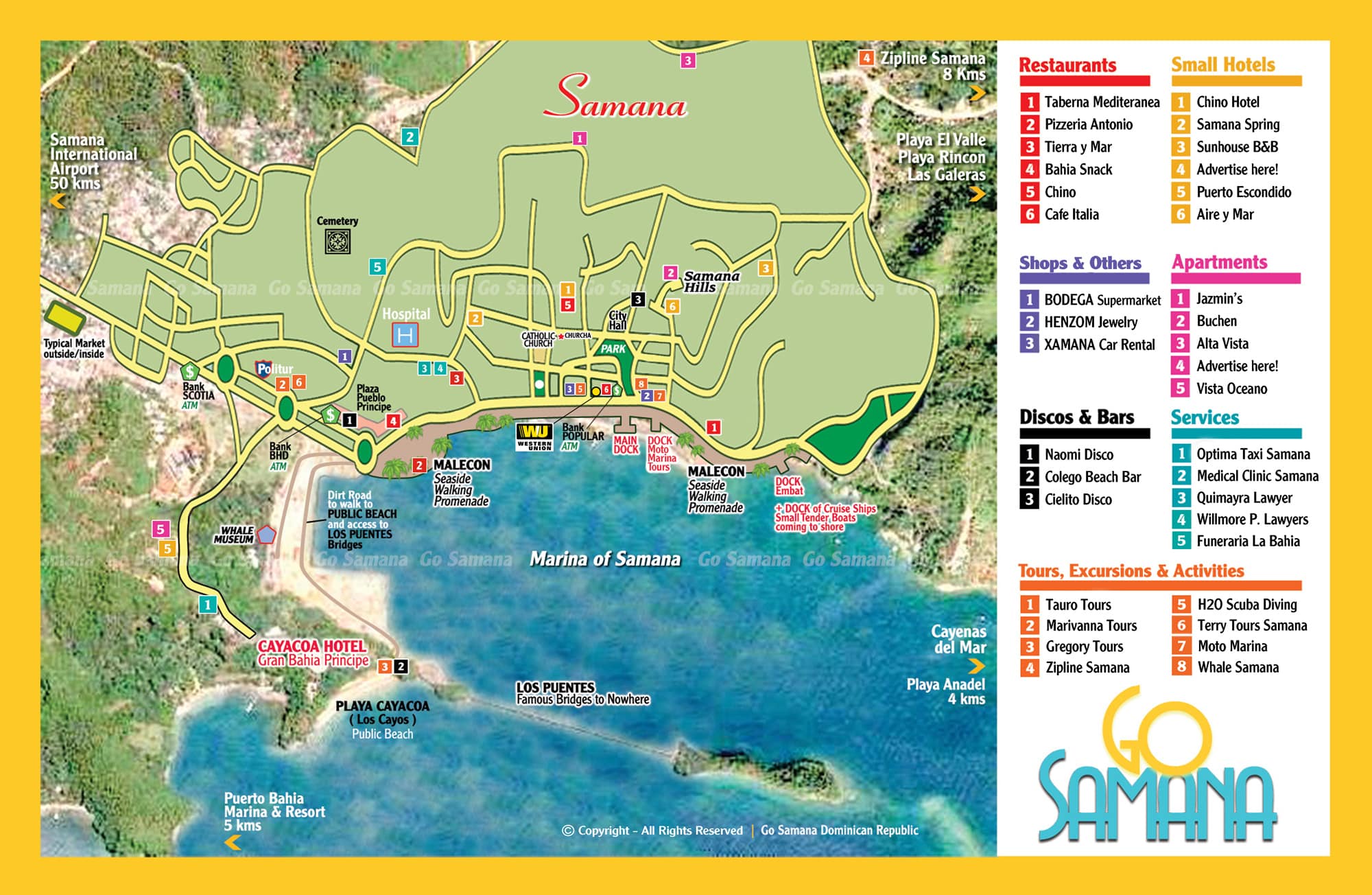

Scan to get the map on your phone
Dining in Samaná, Dominican Republic
Where to eat and drink ashore.
🍽️ Dominican cuisine reflects the influences of the indigenous Taíno people, Spanish colonists, African traditions, and Middle Eastern immigrants — rich flavors and local ingredients in dishes unlike those found anywhere else in the Caribbean:
Royal Snack Bar & Restaurant
Waterfront · 7 min walk from port · $$
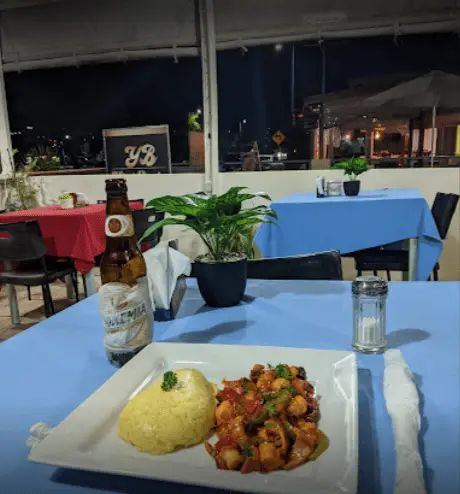
Open for breakfast (crepes), lunch, and dinner — fish fillet, octopus, and fresh seafood alongside burgers and fries. Waterfront location with harbor views.
Glamour Restaurant and Snack Bar
Waterfront promenade · 8 min walk · $ · English spoken
Local dishes and familiar favorites with a fabulous waterfront view and notably good service. One of the few waterfront restaurants in Samaná where staff speak English — easy ordering for non-Spanish speakers. A consistently well-reviewed casual option.
Restaurante y Pica Pollo Yiya
Waterfront · 11 min walk · Local Dominican · $
A genuine local institution — chicken fillets, pica pollo (Dominican-style fried chicken), rice, traditional meat and fish dishes, soups, salads, and sandwiches. Not fine dining, but an authentic and well-loved Samaná restaurant at local prices.
Pizzeria Da Antonio
Waterfront · 11 min walk · Pizza · $
Casual snack bar-style pizza by the water with a variety of toppings at reasonable prices. A quick and easy meal option on the promenade — expect slower service on busy ship days.
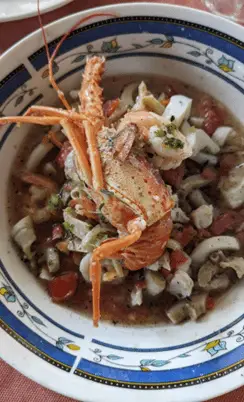
Restaurant El Sazón de la Bahía
12 min walk from port · Seafood · $$
Fresh seafood soups, stews, and rice dishes in a waterfront setting. Vegetarian options available including pasta and vegetable dishes. A good choice for those wanting an authentic Dominican seafood lunch.
Top Tours & Shore Excursions
Book before you board for best availability and pricing.
Exclusive Samana Orientation
⏱ 4.5 Hours · Moderate activity
<p>Ride to a village in an open-air safari vehicle to enjoy a presentation of local items that you can sample and purcha...
Book This Tour →Samana Whale Watching
⏱ 2.5 Hours · Moderate activity
<p>After meeting your friendly local guide at the pier, make your way to the powerboat, which is waiting approximately 5...
Book This Tour →Samana Zipline, Waterfall & Horseback Riding
⏱ 5 Hours · Moderate activity
<p>We have special access to the highly acclaimed "Walk the Plank" zipline, considered to be the best zipline in Samana....
Book This Tour →Samaná, Dominican Republic – FAQ
Common questions from cruise passengers.
What is Samaná known for?
Samaná is known for two things above all: humpback whale watching (one of the best spots in the world, January–March) and the stunning Los Haitises National Park. It's also famous for beautiful beaches like Las Galeras and Las Terrenas.
When is whale watching season in Samaná?
Humpback whales migrate to Samaná Bay from mid-January through March to breed and give birth. This is considered one of the top whale watching destinations in the world during this period.
Is Samaná safe for cruise passengers?
Samaná is considered one of the safer areas of the Dominican Republic for tourists. Exercise normal caution and use licensed tour operators.
Cruise Passenger Tips & Photos
Real tips from real cruisers who've visited Samaná, Dominican Republic.
No tips yet — be the first to share your experience!
Share Your Experience at Samaná, Dominican Republic
Your tips help other cruisers plan their port day. All submissions are reviewed before publishing.