Key Takeaways
- Large cruise ships (4000+ passengers) offer extensive amenities, diverse dining, Broadway-style entertainment, and potential cost savings through economies of scale.
- Mega-ships can better accommodate diverse passenger needs, including advanced accessibility features like assistive listening systems and real-time translation.
- Key drawbacks include crowding, long lines, environmental impact, and limited access to smaller ports that may require tendering ashore.
- The large-ship experience may feel homogeneous, and the size raises additional concerns around safety management, health risks, and negative impacts on port communities.
Large cruise ships, often referred to as mega-ships or floating cities, come with both advantages and disadvantages.
In general terms, we are speaking of cruise ships that hold in excess of 4000 passengers with features that you won’t see on smaller cruise ships.
Here are some of the pros and cons associated with large cruise ships:
The Pros Of Sailing On A Large Cruise Ship
Variety of Amenities
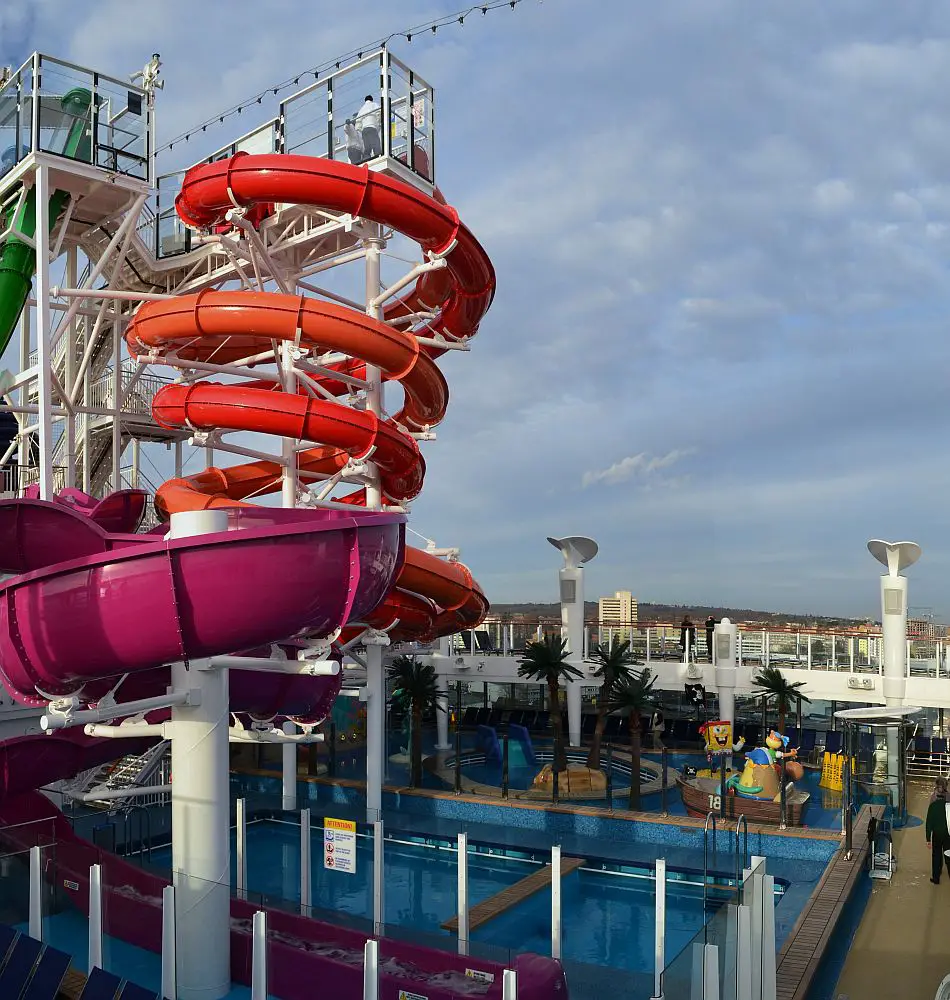
Large cruise ships are like self-contained resorts, offering a wide range of amenities such as multiple restaurants, bars, pools, theaters, fitness centers, casinos, and more. Passengers have access to numerous entertainment options without leaving the ship. Because of the number of passengers, cruise lines tend to offer more enhanced amenities to keep complaints at bay.Luxurious Accommodations
These ships often have spacious and well-appointed cabins with modern amenities, providing passengers with comfortable living spaces during their journey.Entertainment and Activities
With their large size, these ships can offer an array of entertainment options, including Broadway-style shows, live music performances, water parks, rock climbing walls, and even virtual reality experiences.Diverse Dining Options
Mega-ships typically have multiple restaurants serving various cuisines, catering to different tastes and dietary preferences.Cruising Economies of Scale
Due to their large passenger capacity, these ships can offer economies of scale, potentially resulting in lower per-person costs for accommodations, meals, and entertainment.Destinations and Itineraries
Large cruise ships can travel longer distances and visit a wider variety of ports, allowing passengers to explore multiple destinations within a single trip. Meeting The Needs of Guests Larger number of passengers and the diverse needs of those passengers are more often met on larger cruise ships. For example; Royal Caribbean’s mammoth ship, Icon of the Seas, is making sure that all of its guests can have the same listening experience, especially in the Royal Theater onboard. Listen EVERYWHERE is state-of-the-art assistive listening system that will give guests with hearing aids or cochlear implants will benefit from this enhanced listening experience. The system allows all guests to stream live audio directly to their devices, like a smartphone or tablet using the ship’s Wi-Fi network. It can also help passengers with translations, providing speech in their chosen language from anywhere onboard. These kinds of accommodation are not always able to be met on smaller ships.
The Cons Of Sailing On A Large Cruise Ship
Crowds and Lines
The most notable drawback of large cruise ships is the potential for crowded common areas, long lines at dining venues, and congested pool decks. This can lead to a less relaxing experience for some passengers.Environmental Impact
Large cruise ships have been criticized for their significant environmental impact, including air and water pollution, and their potential to damage fragile marine ecosystems in port areas.Limited Port Access
While these cruise ships may have an expanded list of destinations, their size may limit their ability to dock at smaller ports, requiring passengers to be transported to shore via tenders (small boats), which can be time-consuming.Homogeneous Experience
The sheer size of these ships can sometimes result in a homogeneous onboard experience, where the ship's design and amenities might overshadow the uniqueness of the destinations being visited.Safety Concerns
While modern cruise ships adhere to stringent safety regulations, the sheer number of passengers and crew members can make emergency situations more complex to manage.Cultural and Local Impact
In certain ports, the influx of large cruise ships and their passengers can lead to concerns about the preservation of local culture, overcrowding, and strains on local infrastructure.Health Considerations
Large cruise ships can be conducive to the spread of illnesses due to the close proximity of passengers and crew members. The COVID-19 pandemic highlighted this concern, leading to cruise industry shutdowns and increased health protocols.The 12 Largest Cruise Ships in 2025
Royal Caribbean Icon of the Seas Due to set sail in 2024: Gross Tonnage: 250,800 tons Length: 1,198 feet Passenger Capacity (Double/Max): 5,610/7,600 Royal Caribbean Utopia of the Seas Gross Tonnage: 236,860 tons Length: 1,188 feet Passenger Capacity (Double/Max): 5,668/6,509 Royal Caribbean Wonder of the Seas Gross Tonnage: 235,600 tons Length: 1,188 feet Passenger Capacity (Double/Max): 5,734/7,084 Royal Caribbean Symphony of the Seas Gross Tonnage: 228,081 tons Length: 1,188 feet Passenger Capacity (Double/Max): 5,518/6,680 Royal Caribbean Harmony of the Seas Gross Tonnage: 226,963 tons Length: 1,188 feet Passenger Capacity (Double/Max): 5,479/6,687 Royal Caribbean Oasis of the Seas Gross Tonnage: 226,838 tons Length: 1,187 feet Passenger Capacity (Double/Max): 5,602/6,771 Royal Caribbean Allure of the Seas Gross Tonnage: 225,282 tons Length: 1,187 feet Passenger Capacity (Double/Max): 5,484/6,780 MSC World Europa Gross Tonnage: 215,863 tons Length: 1,093 feet Passenger Capacity (Double/Max): 5,400/6,762 P&O Cruises Arvia Gross Tonnage: 184,700 tons Length: 1,130 feet Passenger Capacity (Double/Max): 5,200/6,600 Costa Cruises Costa Smeralda Gross Tonnage: 185,000 tons Length: 1,106 feet Passenger Capacity (Double/Max): 5,224/6,554 P&O Cruises Iona Gross Tonnage: 184,700 tons Length: 1,130 feet Passenger Capacity (Double/Max): 5,200/6,600 Costa Cruises Costa Toscana Gross Tonnage: 182,700 tons Length: 1,106 feet Passengers (Double/Max): 5,224/6,554Is Bigger Always Better? - You Decide
In essence, the choice between a large cruise ship and a smaller cruise ship depends on individual preferences and priorities. Some passengers prioritize the abundance of amenities and activities, while others seek a more intimate and authentic experience that smaller ships or boutique cruise lines can offer. There are plenty of options out there to choose from, but if you can, it would be great to cruise on both a large and smaller ship to really experience the difference.