What to Do in Skagway, Alaska on a Cruise Day
Skagway is Alaska's gold rush town, a remarkably preserved 19th-century boomtown at the foot of mountain passes that once sent thousands of stampeders north. Here is how to spend your cruise day here, from the region's most famous train ride to quiet backcountry trails just minutes from the ship.
Skagway at a Glance
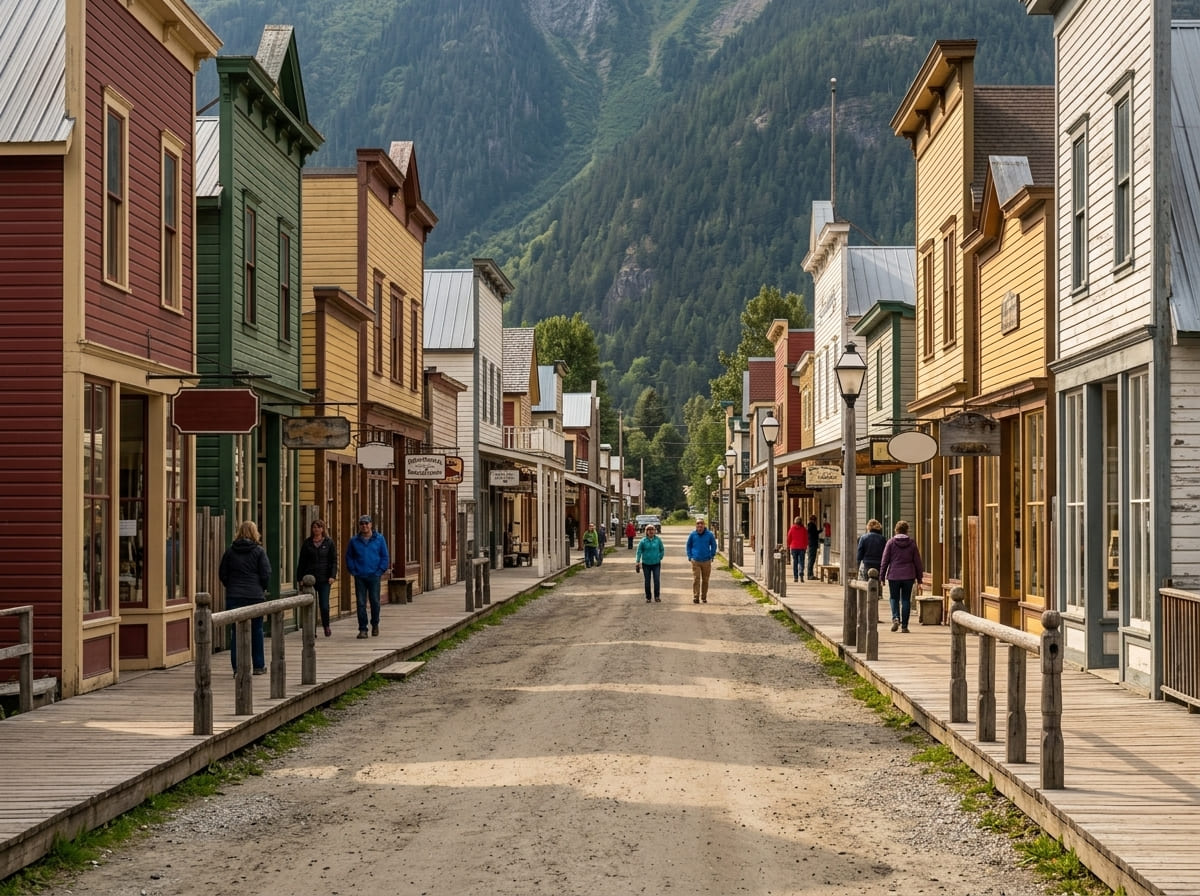
Skagway is one of the most historically distinctive ports on the Alaska Inside Passage itinerary. During the Klondike Gold Rush of 1897 to 1898, this tiny coastal outpost swelled to a population of around 20,000 almost overnight, the staging point for the brutal climbs over the White Pass and Chilkoot trails toward the Yukon goldfields. Most of those stampeders never found gold. Skagway, however, survived as a remarkably intact historic town: Broadway Street looks almost exactly as it did in 1898, and the Klondike Gold Rush National Historical Park preserves the buildings and stories of that extraordinary episode.
Today Skagway has fewer than 1,000 permanent residents but hosts hundreds of thousands of cruise passengers each summer, with over a million visitors passing through in recent years. Multiple large ships can be in port simultaneously, making the historic district extremely busy mid-morning. Getting out of town on an excursion, or being among the first ashore, dramatically improves the experience. Skagway usually pairs with Juneau and Ketchikan on Inside Passage itineraries, and our Alaska cruise ports guide covers the whole route.
- Pier: Downtown Skagway waterfront, ships dock directly on Broadway
- Currency: US Dollar (domestic port)
- Best for: White Pass & Yukon Route railway, Klondike Gold Rush history, hiking, Yukon day trips
- Typical time in port: 7 to 9 hours
- Walking distance from pier: Historic Broadway district, immediate
Top Things to Do in Skagway on a Cruise Day
1. White Pass & Yukon Route Railway
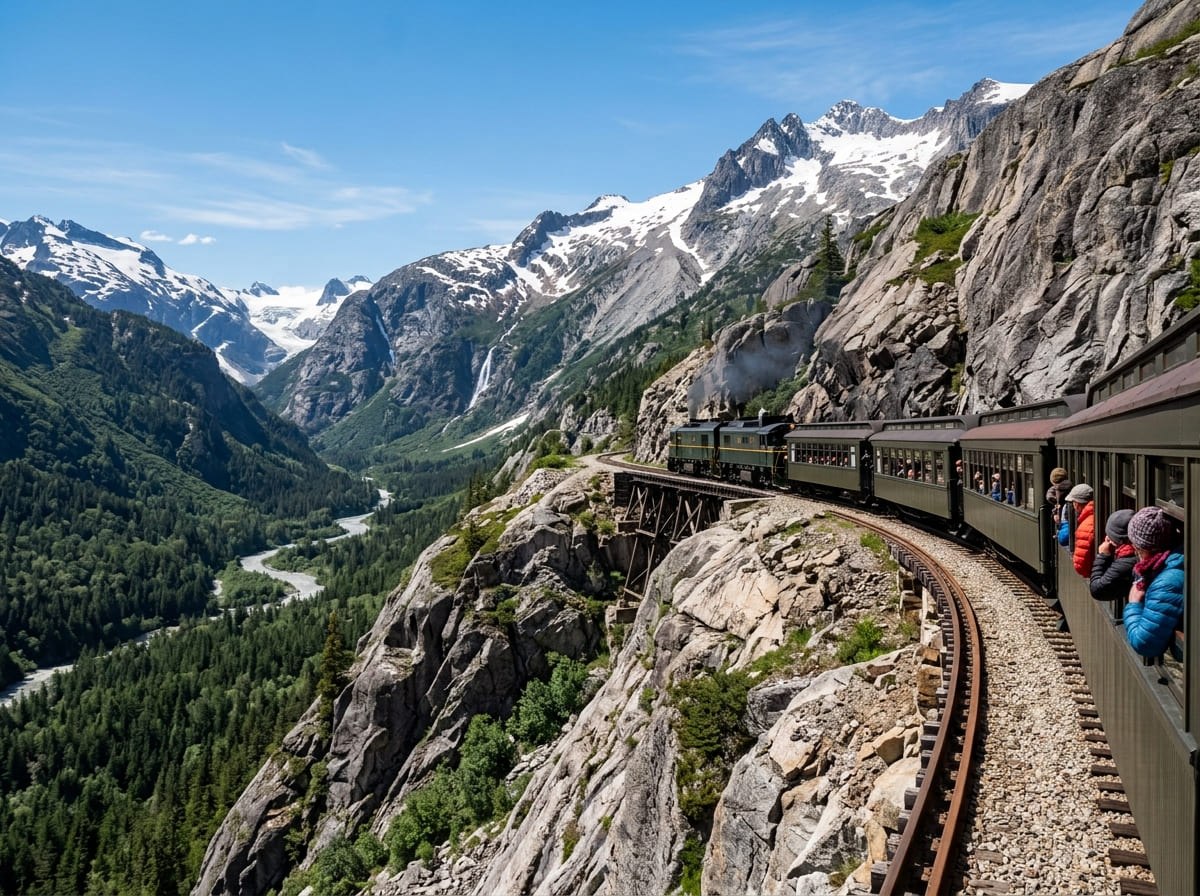
The White Pass & Yukon Route railway is Skagway's signature excursion and one of the most spectacular train journeys in North America. Built between 1898 and 1900 to service the gold rush, in just 26 to 27 months of brutal construction, the narrow-gauge railway climbs from sea level to the 2,865-foot White Pass summit over 20 miles of track clinging to sheer cliff faces. The views, plunging gorges, waterfalls, Dead Horse Gulch, where pack animals perished by the thousands, and the old gold rush trail below the tracks, are extraordinary.
The standard excursion is a 3-hour round trip to the White Pass summit. Some itineraries continue by bus into the Yukon or all the way to Whitehorse for a one-way journey off the ship. Book in advance, since the railway is the most popular excursion in Skagway and fills quickly. Booking directly through the railway generally runs cheaper than through your cruise line, with adult summit fares roughly $155 to $215 depending on how far ahead you book, while cruise line markups can push the price well above $200. Available through both cruise lines and independent operators.
2. Klondike Gold Rush National Historical Park
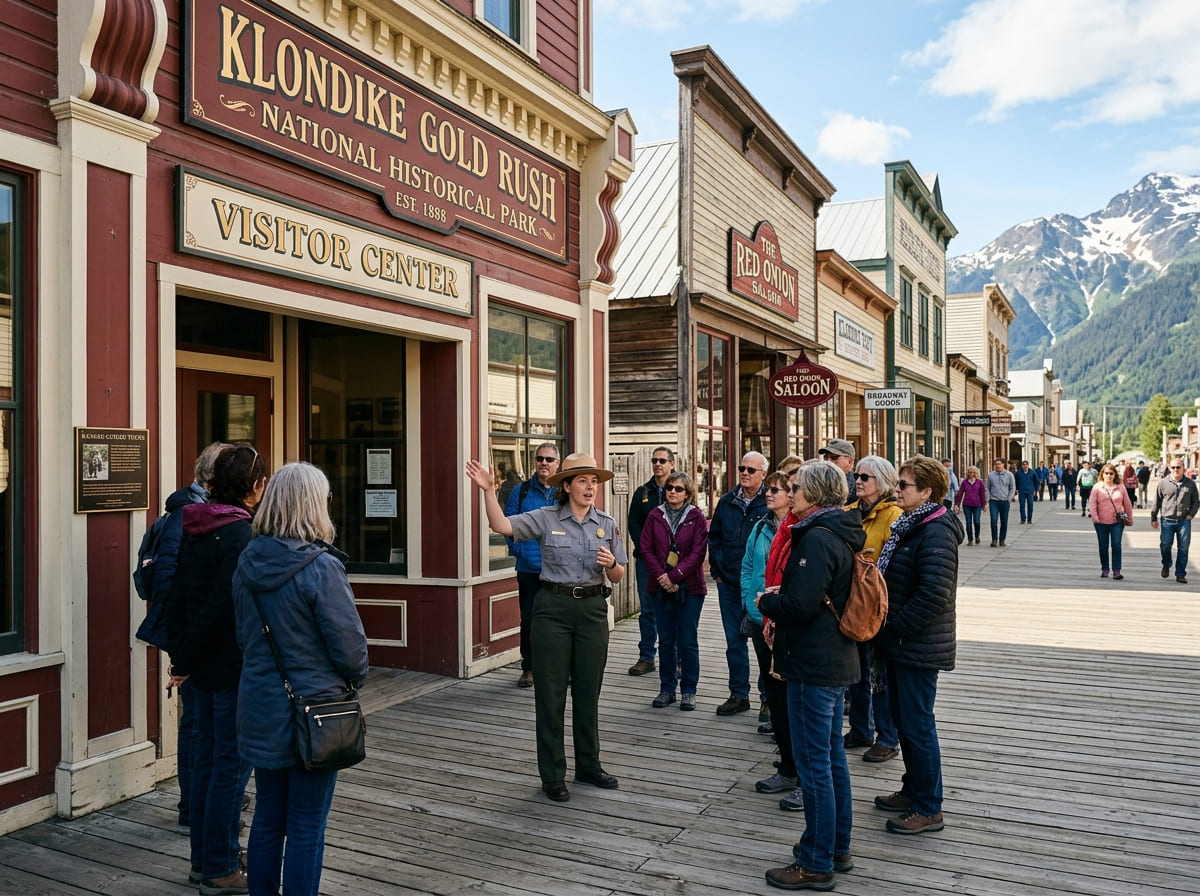
The National Park Service operates a visitor center on Broadway Street, free to enter, with excellent exhibits on the 1898 gold rush, the Skagway story, the notorious con man Soapy Smith, and the Indigenous Tlingit peoples of the region. Ranger-guided walking tours of Broadway depart several times daily. The preserved buildings along Broadway are the most authentic collection of 1898 commercial architecture in existence. Even without a formal tour, walking Broadway and reading the interpretive signs tells a remarkable story. Plan 1.5 to 2 hours.
3. Hiking the Chilkoot Trail (Lower Section)
The full Chilkoot Trail, the historic route stampeders followed from Skagway over the pass into the Yukon, is a 33-mile, multi-day backcountry route requiring permits. But the lower section from Skagway is accessible as a day hike without permits. The trail begins about 9 miles from town, taxi or shuttle required, and the first several miles to Finnegan's Point follow the historic route through forest and alongside the Taiya River. A full lower-section day hike rewards with genuine wilderness and historical atmosphere. Wear waterproof boots, since the trail can be muddy.
4. Zip-Lining and Adventure Tours
Several operators run zip-line and adventure tours in the mountains above Skagway. The canopy lines have views over the town, the Lynn Canal, one of the longest and deepest fjords in North America, and the surrounding peaks. Most courses run 2 to 3 hours, a good adrenaline alternative to the railway for those who have ridden it on a previous Alaska cruise.
5. Yukon Day Trips by Bus or Float Plane
From Skagway, the Canadian Yukon is just over the mountains. Some excursions cross the White Pass by bus into Canada, visiting Carcross, a small First Nations community on a lake with remarkable scenery, or continuing to Whitehorse, Yukon's capital. Floatplane tours offer aerial perspectives over the glaciers and wilderness that no road or railway can match. A floatplane circuit over the Chilkoot Trail and surrounding peaks is genuinely extraordinary.
6. Broadway Street and Local Shops
Skagway's Broadway Street is historic and genuinely interesting to walk, but it is also very commercially developed for a town of under 1,000 people. The jewelry, art, and souvenir shops cater heavily to cruise passengers. For authentically local shopping, look for the Alaska Native art galleries and the handful of independent shops off the main strip. The Red Onion Saloon, a historic brothel turned bar, is a Skagway institution and a fun stop for a beer, though it leans heavily into its tourist appeal.
Getting Around Skagway
Skagway is a walking town, the historic district is very compact and the pier drops you directly onto Broadway. Taxis and vans are available for the Chilkoot Trail trailhead and other outlying destinations. The White Pass railway and most excursion operators depart from the depot on Broadway, a short walk from the piers.
Tips for Your Skagway Port Day
- Book the White Pass railway months in advance, since it is the most popular Alaska cruise excursion and sells out, especially morning departures.
- Go early or late on Broadway, since mid-morning when multiple ships are fully disembarked, the street is extremely crowded; first thing in the morning or late afternoon it is genuinely atmospheric.
- The National Park visitor center is free and excellent, so spend 30 minutes there before walking Broadway for proper context.
- Bring layers, since Skagway can be warm in the valley but cold at White Pass altitude, and the train ride gets cold quickly at summit elevation.
- Skagway weather is often the best in Southeast Alaska, since it sits in a rain shadow and sees more sun than Ketchikan or Juneau.
Skagway FAQs for Cruise Passengers
What is the White Pass and why is it historically significant?
The White Pass is a mountain pass at 2,865 feet elevation in the Coast Mountains, on the border between Alaska and the Canadian Yukon. During the 1897 to 1898 Klondike Gold Rush, tens of thousands of stampeders attempted to cross either White Pass or the nearby Chilkoot Pass on their way to the Yukon goldfields. The White Pass route was marginally less steep but through challenging terrain, and the Dead Horse Gulch section saw so many pack animals perish from exhaustion and the conditions that the pass earned the nickname Dead Horse Trail. The railway, built shortly after, made the journey possible without such loss.
Who was Soapy Smith?
Jefferson Randolph "Soapy" Smith was Skagway's most notorious historical figure, a con man and crime boss who controlled the town during the gold rush of 1898, running a criminal operation that preyed on incoming stampeders. He was shot dead in July 1898 in a gunfight on the Skagway docks, bringing his reign to an abrupt end. The National Park visitor center has excellent exhibits on his story, and his grave in the Gold Rush Cemetery is a short walk from downtown.
Is the White Pass & Yukon Route railway the same one built during the gold rush?
Yes, the White Pass & Yukon Route was built between 1898 and 1900 as a narrow-gauge railway to service the Klondike Gold Rush. It operated until 1982 when ore prices collapsed, then reopened as a tourist railway in 1988. The original track, bridges, and much of the original infrastructure are intact and in use. Riding it is a genuine historical experience, not a reproduction.
Do I need a passport for Skagway?
Skagway itself is a US domestic port, so no passport is needed. However, some excursions cross the border into Canada, such as Carcross or Whitehorse Yukon day trips. If you are booking any excursion that enters Canada, a valid US passport is required for US citizens. Non-US citizens should confirm entry requirements for Canada with their cruise line in advance.