Willemstad is one of the most visually striking cities in the Caribbean, a row of Dutch colonial merchant houses painted in vivid color, standing right on the waterfront. The capital of Curaçao rewards a cruise day with a UNESCO listed old town, some of the clearest snorkeling water in the region, and a laid back Southern Caribbean pace. Knowing how to spend your hours here turns a photogenic stop into one of the most memorable port days on the itinerary.
Here is the quick answer for a great day in Willemstad. Walk across the Queen Emma Bridge and explore the colorful Punda and Otrobanda districts, catch the floating market in the morning, then choose your afternoon: a beach club at Mambo, easy shore snorkeling at Tugboat Beach, or a tasting at the Blue Curaçao distillery. Curaçao often sails with Grenada and San Juan, so plan the run together, and you can lock in tours on our shore excursions page.
Willemstad at a Glance
Willemstad, the capital of Curaçao, is one of the genuinely distinctive port stops in the Southern Caribbean. The waterfront district of Handelskade, a line of Dutch colonial merchant houses painted in vivid shades of ochre, turquoise, coral, and terracotta, is one of the most photographed streetscapes in the entire region, and deservedly so. The city is a UNESCO World Heritage Site, and unlike some heritage designations that feel like marketing, Willemstad's colonial center truly rewards the time you spend walking through it.
Curaçao sits outside the hurricane belt, which gives it reliably good weather all year. The island pairs a dry, desert like interior with a jewel bright coastline, and the water is extraordinarily clear. Some of the best shore diving and snorkeling in the Caribbean is reachable straight from the beaches here, easily a match for reef favorites like Roatan.
- Pier: Mega Pier or Rif Fort terminal, Willemstad harbor
- Currency: Netherlands Antillean Guilder (ANG), with US dollars and euros widely accepted
- Best for: Historic city walking, beaches, snorkeling, Blue Curaçao tasting, Hato Caves
- Typical time in port: 8 to 10 hours
- Taxi to Mambo Beach: about 15 minutes, roughly $10 to $15 each way
Top Things to Do in Willemstad on a Cruise Day
1. Walk the Punda and Otrobanda Districts
The two halves of Willemstad's historic center, Punda on the east bank and Otrobanda on the west, are joined by the Queen Emma Pontoon Bridge, a floating pedestrian bridge that swings open to let boat traffic through the harbor. Walking across it is a memorable experience in itself, and the view of the colorful Handelskade buildings from the bridge is the classic Willemstad photograph.
Punda holds the famous waterfront facades, the floating market where Venezuelan vendors sell fresh produce from their boats, and the main shopping streets. Otrobanda is more residential and historic, home to the Kura Hulanda Museum, one of the best slavery history museums in the Caribbean, along with quieter streets that reward a wander. Allow 2 to 3 hours to walk both properly.
2. Mambo Beach and the Southeast Coast
Mambo Beach is Curaçao's most popular beach club, a well kept stretch of white sand on the southeast coast with clear, calm water, beach bars, and watersport rentals. It sits about 15 minutes by taxi from the pier. Day passes cover the beach and facilities, and the water quality here is excellent for swimming. Seaquarium Beach, right beside Mambo, is a little quieter and every bit as good.
3. Snorkeling at Tugboat Beach or Blue Bay
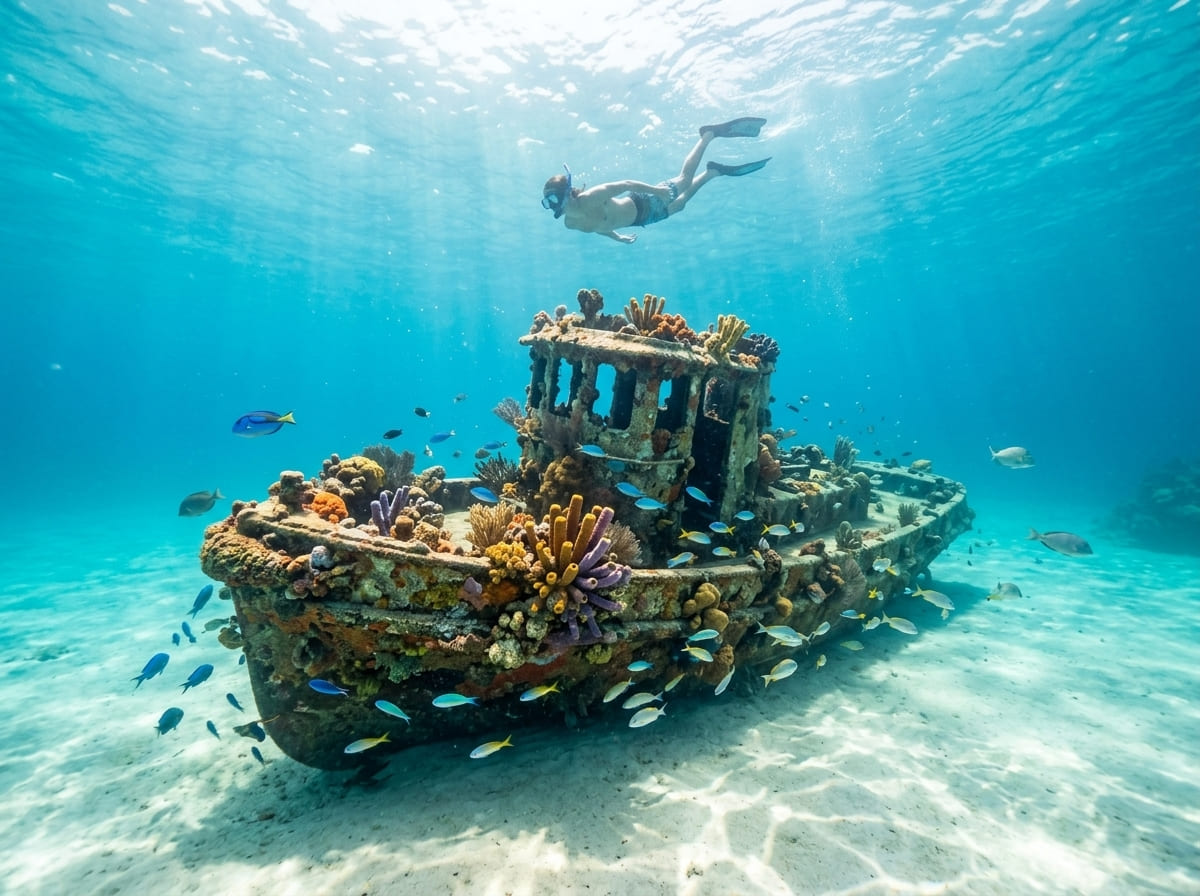
Curaçao's underwater world is extraordinary, since the island's position outside the hurricane belt and its minimal freshwater runoff keep visibility consistently exceptional. Tugboat Beach, officially Caracasbaai, has a small, easily reached tugboat wreck in about 15 feet of water that teems with reef fish, and you can snorkel to it straight from the beach without a boat. Blue Bay is a beach club on the west coast with excellent reef snorkeling directly off the shore. Both fit comfortably into a half day from port, and the clarity rivals the water at Grand Cayman.
4. Hato Caves
The Hato Caves are a network of limestone caverns in Curaçao's interior, complete with stalactites, stalagmites, ancient indigenous rock drawings, and a small colony of long nosed bats. Guided tours run regularly and last about 45 minutes. The formations are genuinely impressive, and the indigenous drawings add real historical depth. The caves sit about 20 minutes from the pier by taxi, and they make a good option for anyone who wants a break from sun and beach.
5. The Curaçao Liqueur Distillery
The famous Blue Curaçao liqueur is made right on the island, and the original distillery at Landhuis Chobolobo, a 17th century plantation house, offers tours and tastings. You will learn how the liqueur is produced from the dried peel of the laraha citrus fruit, a bitter relative of the orange that grows only on Curaçao, taste the various colors and flavors, and buy straight from the source. It is about 15 minutes from the pier, and the tour is short at 30 to 40 minutes, which makes it an easy pairing with the city walk.
6. Floating Market (Marché Flottant)
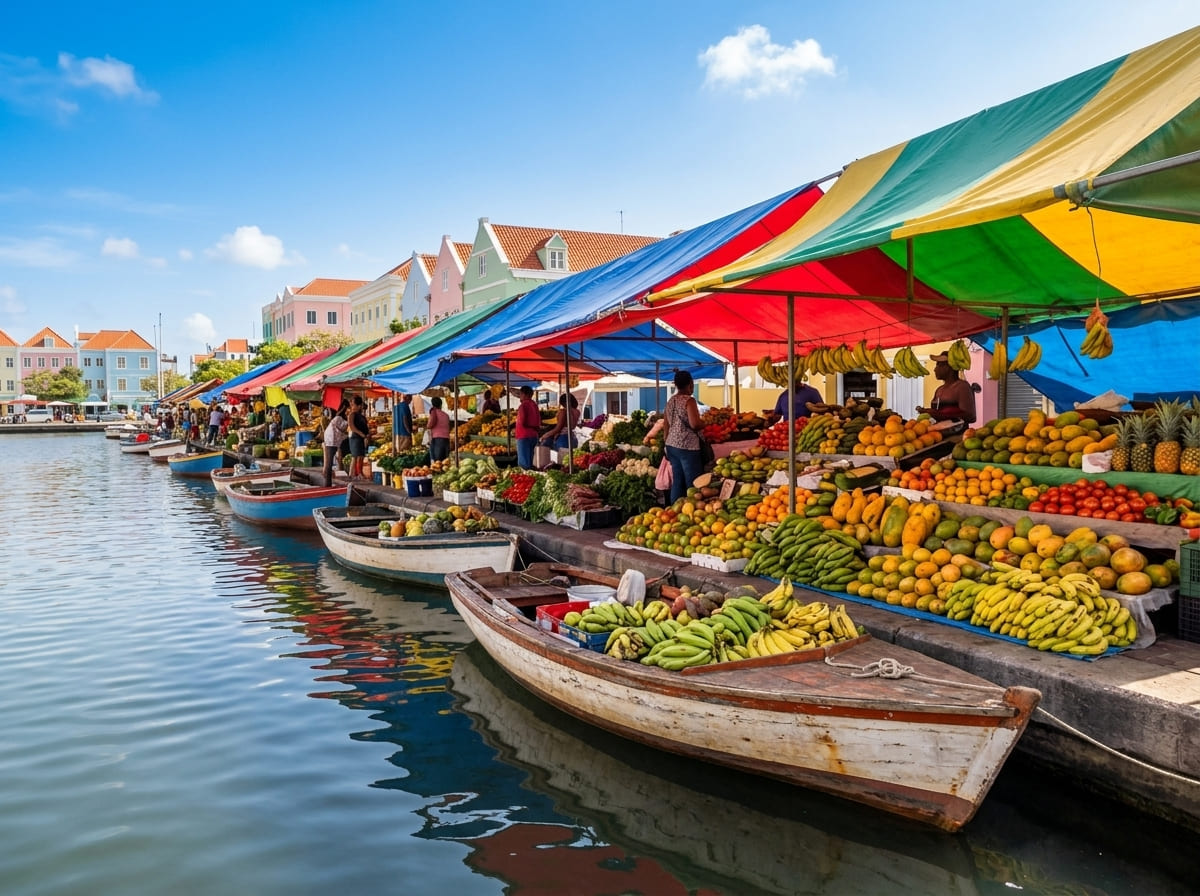
One of Willemstad's most distinctive daily scenes is the floating market along the Sha Caprileskade in Punda, where Venezuelan fishing boats tie up along the waterfront and sell tropical fruit, vegetables, fish, and crafts straight to local buyers. It is busiest in the morning. There is nothing else quite like it in the Caribbean, and it costs nothing to walk through and take in. Buy a bag of tropical fruit and stroll the harbor, and you have a perfect hour.
7. Fort Amsterdam and the Governor's Palace
Fort Amsterdam, built by the Dutch West India Company in the 1600s, stands at the entrance to the harbor and houses the Governor's Palace and a historic church with an English cannonball still lodged in its wall from an 18th century attack. Entry to the fort grounds is free, and the views across the harbor entrance and toward the Queen Emma Bridge from the fort walls are excellent.
Getting Around Willemstad
The historic center is walkable from both pier locations. The Mega Pier is a little farther from Punda at about 10 to 15 minutes on foot, while the Rif Fort terminal drops you right at the waterfront. Taxis are the standard way to reach beaches and attractions outside town, and you should agree on a fare before getting in, with most beach destinations running $10 to $20 from the pier. Local buses, known as konvooi, are cheap but less convenient for a time limited port day. If you would rather have everything arranged before you sail, book a vetted tour through our shore excursions partner.
Tips for Your Willemstad Port Day
- Walk across the Queen Emma Bridge, since it is free, takes five minutes, and the Handelskade view is the classic Curaçao photo.
- Visit the floating market in the morning, because it winds down by midday.
- Bring reef safe sunscreen for snorkeling, as Curaçao's reefs are well protected and reef safe products are preferred.
- US dollars are accepted everywhere, though you may get change back in local guilders.
- The Tugboat at Caracasbaai is one of the easiest snorkel wrecks in the Caribbean, reachable on a short swim from the beach.
- Curaçao is drier and less humid than many Caribbean islands, so while you still need sunscreen and water, the heat is generally more bearable.
Plan the Rest of Your Caribbean Itinerary
Willemstad usually sails alongside other Southern Caribbean stops, so these guides pair naturally with it:
- What to Do in St. George's, Grenada on a Cruise Day
- What to Do in Charlotte Amalie, St. Thomas on a Cruise Day
- San Juan, Puerto Rico cruise port guide
- What to Do in Roatan, Honduras on a Cruise Day
- Browse all Caribbean cruise ports
Willemstad: Frequently Asked Questions for Cruise Passengers
Is Willemstad safe for cruise passengers?
Willemstad is considered one of the safer Caribbean cruise destinations. The historic center is well kept and regularly patrolled. Standard urban precautions apply, so be aware of your surroundings, do not leave valuables unattended at the beach, and use licensed taxis. The tourist areas around the waterfront, Punda, and Otrobanda are generally very relaxed and low pressure compared with some other Caribbean ports. For questions about any specific stop, our cruise FAQ is a helpful starting point.
Is Curaçao part of the Netherlands?
Curaçao is a constituent country of the Kingdom of the Netherlands, autonomous in its own governance but part of the Dutch kingdom. That gives it a distinct Dutch Caribbean character, with Dutch colonial architecture, Dutch cultural influences, and the Netherlands Antillean Guilder as currency, all alongside a rich Afro Caribbean heritage expressed through the local Papiamentu language. It is a genuinely multicultural place with an identity all its own.
What is Blue Curaçao and where can I buy it?
Blue Curaçao is a citrus flavored liqueur made from the dried peel of the laraha orange, a bitter citrus fruit that grows only on Curaçao. The blue color is artificial, since the original liqueur is colorless. The Senior & Co. distillery at Landhuis Chobolobo is the original producer and offers tours and direct sales. You can also buy it at the terminal duty free shops, but the distillery experience and direct pricing make the short trip worthwhile.
Can I walk from the Willemstad cruise pier to the historic center?
Yes. If you dock at the Rif Fort terminal, you are steps from the entrance to Otrobanda and a short walk from the Queen Emma Bridge. From the Mega Pier it is about a 10 to 15 minute walk to the center. Both are walkable without a taxi, which makes Willemstad one of the more accessible cruise ports for independent exploring.