
- A luxury cruise travel agent costs you nothing extra — they're paid by the cruise line — but can add $500–$1,500 in amenities like onboard credit, excursions, and upgrades on a typical $20,000 booking.
- Luxury cruises (Regent, Silversea, Seabourn, etc.) differ fundamentally from mainstream lines: fares are much higher but nearly everything is included, ships are smaller, and booking decisions carry more financial weight.
- Look for agents with cruise line specialist certifications and membership in consortia like Virtuoso, as these credentials indicate access to preferred amenity programs and firsthand sailing experience.
- Popular luxury sailings — especially expeditions like Antarctica — should be booked 12–18 months in advance to secure the best cabins and itineraries.
Luxury Cruising Is a Different Category
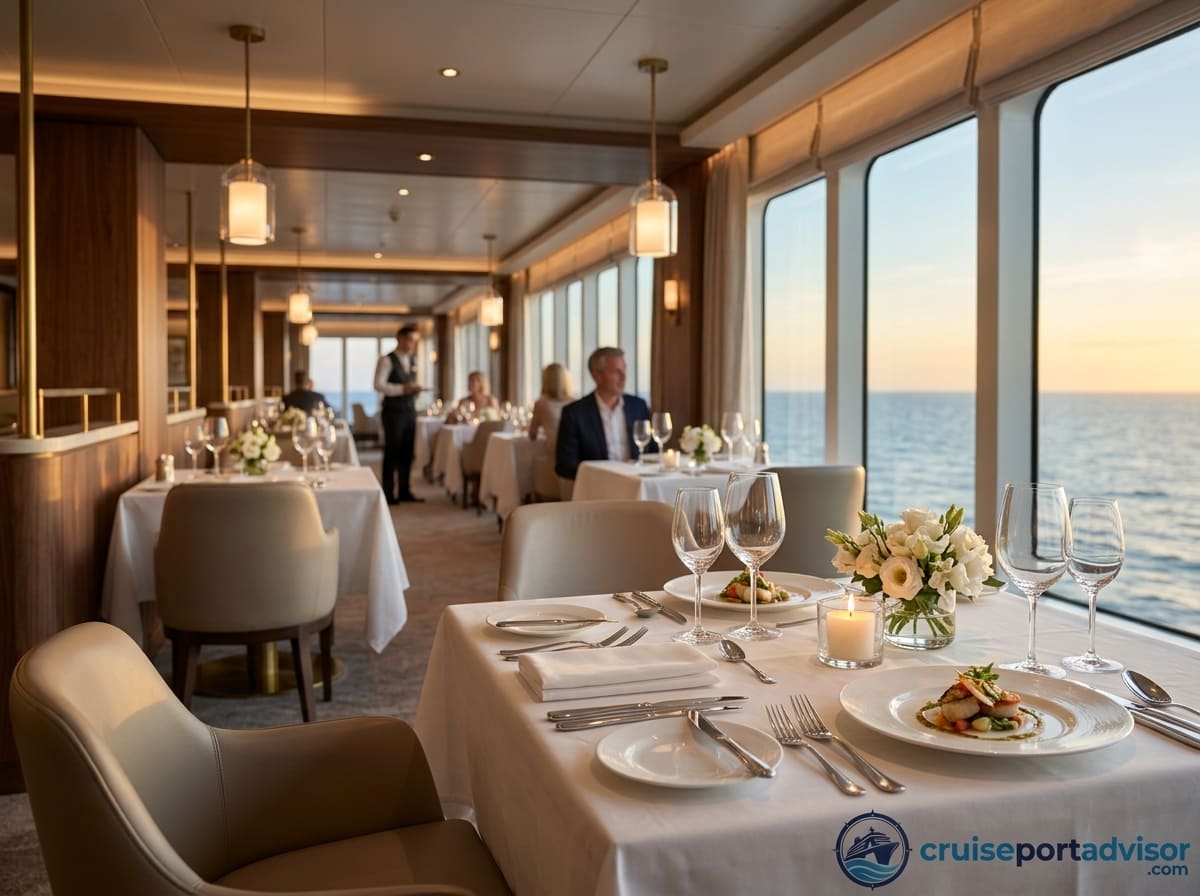
Luxury cruise lines — Regent Seven Seas, Silversea, Seabourn, Crystal, Explora Journeys, Scenic, and a handful of others — operate in a fundamentally different way from mainstream cruise lines. Fares are dramatically higher. Almost everything is included: meals at every venue, premium alcohol, shore excursions, gratuities, flights in some cases, and pre-cruise hotel stays. Ships are smaller. Service ratios are higher. The experience is genuinely closer to a boutique hotel at sea than the floating resort city that characterises Carnival or Royal Caribbean.
Because the stakes are higher — a 10-night luxury cruise for two can easily run $15,000–$40,000 or more — booking decisions matter more. And the role of a specialist travel agent is considerably more valuable in this segment than it is when booking a mainstream Caribbean cruise.
What a Luxury Cruise Travel Agent Actually Does
A common misconception is that travel agents are intermediaries who add a layer of cost and bureaucracy between you and the cruise line. In the luxury segment, the opposite is often true — a good agent costs you nothing (they're paid by the cruise line) and adds significant value that booking direct doesn't provide.
Access to Added Value and Amenities
Luxury cruise lines offer what are called "amenity" programs to preferred travel agency partners — agencies that consistently book a certain volume of business. These amenities are add-ons provided at no extra charge: onboard credit, complimentary shore excursions, specialty dining packages, cabin upgrades, spa credits, or pre-paid gratuities. These aren't available when you book direct through the cruise line's website.
On a $20,000 booking, $500–$1,500 in amenities from an agency partner is not uncommon. That's a meaningful difference with zero additional cost to you.
Knowledge That Goes Beyond the Brochure
Specialist luxury cruise agents have typically sailed the ships they recommend. They know which cabin categories are genuinely worth the upgrade and which aren't, which itineraries have the best port combinations, which seasons to avoid on specific routes, and which ships are due for refurbishment. This firsthand knowledge is genuinely useful when you're choosing between, say, a Silversea Silver Nova sailing the Adriatic and a Regent Seven Seas Explorer sailing the same region at a higher price point.
Relationship and Advocacy
A good agent has relationships with the cruise line's sales representatives. When something goes wrong — a cabin issue, a billing dispute, a flight connection problem — an agent with an established relationship can escalate and resolve the issue faster than a direct customer calling the general reservations line. This becomes more relevant on multi-week luxury voyages where problems have more time to develop.
Itinerary and Timing Advice
Luxury itineraries are more complex than mainstream ones. World cruises, expedition sailings, river-to-ocean combinations, and back-to-back voyage strategies require genuine planning expertise. An agent who books these regularly knows, for example, that the best Antarctica sailings need to be booked 18 months in advance, or that certain Mediterranean itineraries have significant port overlap between competing ships on specific dates.
How to Find a Luxury Cruise Specialist
Look for Cruise Line Certification Programs
Most luxury cruise lines have specialist certification programs — Regent Seven Seas has their "Specialist" program, Silversea has "Silver Expert," Seabourn has "Seabourn Specialist." These designations require training, sailing the ships, and meeting minimum booking volumes. They're not a guarantee of quality, but they indicate genuine familiarity with the product rather than a generalist agent who booked one luxury sailing two years ago.
Consortium Membership
The most respected luxury travel agencies typically belong to consortia like Virtuoso, Signature Travel Network, or Ensemble. Virtuoso in particular has a strong reputation in the luxury travel space — member agencies receive preferred amenity packages from luxury cruise lines, and the training and quality standards for Virtuoso membership are significant. Booking through a Virtuoso-affiliated agent often provides the best combination of expertise and added value.
Ask the Right Questions
When evaluating a potential agent, ask directly: Have you sailed on this ship? What do you know about the difference between cabin categories X and Y? What amenities does your agency offer on this sailing? What's your experience with this cruise line specifically? A specialist will answer these questions with specificity. A generalist will give you vague answers and redirect you to the brochure.
Booking Direct vs. Through an Agent
| Booking Direct | Using a Specialist Agent | |
|---|---|---|
| Price | Published cruise line rate | Same published rate + amenities on top |
| Added value | None beyond occasional direct promos | OBC, excursions, upgrades, spa credits |
| Expertise | Reservations staff (limited product knowledge) | Specialist who has sailed the ships |
| Advocacy | You handle all issues directly | Agent advocates on your behalf |
| Cost to you | No additional fee | No additional fee (agent paid by cruise line) |
There is virtually no financial argument for booking a luxury cruise direct versus using a specialist agent. The price is the same or lower, the added value is better, and you get expertise and advocacy that a reservations line can't provide. The only reason to book direct is if you have a specific preference for managing everything yourself — which some travellers do. If you're still in the browsing stage, our cruise search tool is a good place to see what's sailing before you approach an agent.
The Main Luxury Cruise Lines at a Glance
Regent Seven Seas Cruises
Regent markets itself as "the most inclusive luxury experience at sea" — and largely delivers on it. Nearly everything is included: shore excursions, premium alcohol, specialty dining, business class flights on longer voyages, pre-cruise hotel stays. Ships are mid-size (700–750 passengers), service is attentive, and the cuisine is genuinely excellent. Regent suits travellers who want a comprehensive all-inclusive experience without tracking what everything costs.
Silversea
Silversea operates a fleet that spans intimate expedition ships to mid-size luxury vessels. Known for strong culinary programming, excellent butler service in suite-only accommodation, and a particularly strong expedition portfolio for destinations like Antarctica, the Galápagos, and the Arctic. The Silver Nova and Silver Ray are among the newest ships in the luxury segment.
Seabourn
Seabourn's ships are small — most carry 450–600 passengers — which means an exceptionally high staff-to-guest ratio and personalised service. Seabourn is particularly well-regarded for its destination programming and expedition offerings in remote polar regions. The line has a loyal repeat passenger base who value the intimate scale above everything else.
Crystal Cruises
Crystal relaunched under new ownership in 2023 after the original company's financial collapse. The relaunched Crystal maintains the quality standards and itinerary ambition of the original, with two ocean ships focusing on premium destination experiences. It's in the process of rebuilding its reputation and loyal customer base.
Tips for First-Time Luxury Cruise Bookers
- Book 12–18 months in advance for popular sailings — the best suites on luxury ships sell out early and rarely come back to market at published rates
- Understand what's truly included — "all-inclusive" means different things on different lines; confirm excursion inclusions, alcohol brands, and flight benefits before comparing prices
- Solo traveller premiums are a significant issue on luxury lines — single supplements can be 25–100% above the per-person double occupancy rate; ask your agent about solo-friendly pricing or guaranteed share programs
- Travel insurance is non-negotiable at these price points — ensure your policy covers the full trip cost and has adequate medical and evacuation coverage
- Back-to-back voyages can deliver significant savings — booking two consecutive sailings often comes with loyalty discounts and suite upgrades
Luxury Cruise FAQs
How much does a luxury cruise cost?
Luxury cruise pricing varies enormously by line, itinerary, suite category, and inclusions. As a rough guide: entry-level suites on lines like Silversea or Regent start around $500–$800 per person per night; mid-range suites run $800–$1,500 per person per night; penthouse and owner's suites on the best ships can exceed $3,000–$5,000 per person per night. On truly inclusive lines, these rates include excursions, alcohol, specialty dining, and sometimes flights — which changes the value equation considerably compared to mainstream lines where everything is extra.
Is a luxury cruise worth the extra cost compared to mainstream?
For the right traveller, yes — significantly. The included shore excursions alone can represent $200–$400 per person per port on mainstream lines, which erodes the price difference quickly on longer itineraries. Add premium alcohol, specialty dining, and the absence of nickel-and-diming, and the gap between luxury all-inclusive and a premium mainstream cruise is often smaller than it appears. The experience gap — smaller ships, higher service ratios, more considered cuisine, less crowded pools and venues — is real and substantial.
Do luxury cruises include flights?
Some do. Regent Seven Seas includes free business class flights on many sailings of 14+ nights. Silversea and Seabourn offer air programs that can include business class at significant discounts compared to booking independently. The terms and applicable airports vary — always check what's included and compare against booking your own flights before assuming the included air is the best deal.
What is Virtuoso and why does it matter for luxury cruise booking?
Virtuoso is the world's leading network of luxury travel agencies. Member agencies receive preferred amenity packages from luxury travel suppliers including cruise lines — meaning their clients get added value (onboard credit, excursions, upgrades) not available elsewhere. Booking a luxury cruise through a Virtuoso-affiliated agent is generally the best way to maximise value while also accessing genuine expertise.
Do I need to dress formally on a luxury cruise?
Generally yes, at least some evenings. Luxury lines tend to maintain more of a dress code than mainstream lines — country club casual by day, with formal or elegant casual evenings depending on the line and itinerary. Regent and Silversea are less formal than they once were; Crystal and Seabourn retain more traditional formal nights on longer voyages. Check your specific line's guidance, since dress codes vary considerably across the industry.