Quick answer: To prevent seasickness on a cruise, book a midship cabin on a lower deck, start a remedy before you feel sick (a prescription scopolamine patch for the strongest protection, or over the counter meclizine for daytime), and if queasiness starts anyway, get outside and look at the horizon. Most people never get seasick on a modern ship, but being prepared costs very little.
Most travelers do not get seasick on a large modern cruise ship sailing a typical Caribbean itinerary. These ships are enormous, some well over 200,000 gross tons, and stabilizers soften most wave motion. A summer week in the Eastern Caribbean is about as smooth as ocean travel gets. Still, some people are simply more susceptible, some routes run rougher, and even a calm itinerary can bring an unexpected swell. Here is what genuinely helps and what is mostly wishful thinking.
- Strongest option: Scopolamine patch (prescription). Lasts up to 3 days.
- Best over the counter daytime option: Meclizine (Dramamine Less Drowsy or Bonine)
- Most sedating option: Original Dramamine (dimenhydrinate)
- Mild nausea helper: Ginger
- Best cabin: Midship on a lower deck
- Best instant move: Go outside and fix your eyes on the horizon
- Last resort: The ship's medical center, which charges for care
- Smoothest sailing: Typical Caribbean and Bahamas itineraries in calm weather
Why Seasickness Happens
Your inner ear senses motion, but your eyes do not always agree, especially in an enclosed cabin or a windowless space with no horizon to anchor to. That mismatch between what you feel and what you see is what triggers nausea. Every effective remedy either reduces that conflict or dampens your inner ear's reaction to it.
Anyone can be affected, but people who get carsick, get queasy on boats or have a history of migraines tend to be more susceptible. If that sounds like you, plan ahead instead of waiting to see how you feel.
This article is general information, not medical advice. Check with your doctor or pharmacist before using any medication, especially if you are pregnant, take other medicines, have a health condition or are choosing something for a child.
The Remedies, Ranked by Effectiveness
1. Scopolamine Patch (Prescription)
This is the most effective option for most people, particularly on cruises of several days. It is a small adhesive patch worn behind the ear that releases medication steadily for up to 72 hours. For someone who knows they are susceptible, this is what many travel medicine doctors recommend.
- Plan ahead: It needs a prescription, so talk to your doctor well before you sail.
- Timing: Apply it at least 4 hours before you need it. Many people put it on the evening before boarding, so it is working by the time the ship leaves port.
- Common side effects: Dry mouth is very common. Blurred vision, drowsiness and dizziness can happen.
- Handling: Wash your hands after touching the patch, because contact with your eyes can enlarge a pupil and blur vision.
- Longer trips: It lasts up to 3 days, so a week long cruise usually means replacing it, placing the new one behind the other ear.
- Not for everyone: It is not meant for children, and people with glaucoma, certain bladder or urinary problems or older adults should discuss it with a doctor first.
2. Dramamine Original (Dimenhydrinate)
Available over the counter and effective for many people. The drawback is significant drowsiness. If you take it in the morning, you may spend the afternoon asleep. Take it about 30 to 60 minutes before you expect rough conditions. It suits nighttime use or situations where sedation is not a problem.
3. Dramamine Less Drowsy and Bonine (Meclizine)
Both brands use the same active ingredient, meclizine. It is generally the better daytime choice: still effective, usually less sedating than original Dramamine, and sold at any pharmacy without a prescription. Take it about an hour before you expect motion, and keep a few tablets in your daypack as a backup.
Important: Do not combine a scopolamine patch with an antihistamine such as meclizine or dimenhydrinate unless your doctor or pharmacist says it is fine. Both can cause dry mouth, drowsiness and blurred vision, and stacking them can increase those effects. Alcohol also adds to drowsiness.
4. Ginger
Ginger has more support behind it than most natural remedies, and it is useful for mild nausea. Ginger chews, capsules or real ginger tea can help to some degree. It is not as strong as medication, but it is easy to take and often pairs well with other strategies. Note that many ginger ales contain very little actual ginger, so chews or capsules are a better bet. If you feel the first hint of queasiness and want to avoid medication, start here.
5. Sea Band Wristbands (Acupressure)
These press on the P6 (Nei Guan) point on the inner wrist. They are cheap and drug free, and some people swear by them. Clinical results are mixed: some studies show modest benefit, others show nothing beyond placebo. They are worth trying if you want to avoid medication, but if you are prone to serious seasickness, do not rely on them alone.
Seasickness Remedies at a Glance
| Remedy | Prescription? | Drowsiness | When to start |
|---|---|---|---|
| Scopolamine patch | Yes | Mild for some, plus dry mouth | At least 4 hours before, often the night before |
| Original Dramamine | No | High | 30 to 60 minutes before |
| Meclizine (Less Drowsy, Bonine) | No | Low to moderate | About 1 hour before |
| Ginger | No | None | At the first hint of nausea |
| Sea Band wristbands | No | None | Before sailing |

Non Medication Strategies That Help
- Get outside and look at the horizon. Fixing your gaze on a stable point in the distance helps your eyes and inner ear agree again. This is the best immediate step.
- Get fresh air. Stuffy, enclosed spaces make symptoms worse. If you need to lie down, do it with your head still and your eyes closed rather than reading or using a screen.
- Stay hydrated. Dehydration worsens nausea, especially if you are also drinking alcohol. Our guide to onboard credit is handy if you want to put it toward water, tea or specialty coffee.
- Do not overeat or go on an empty stomach. Small, plain meals tend to work best in rougher conditions.
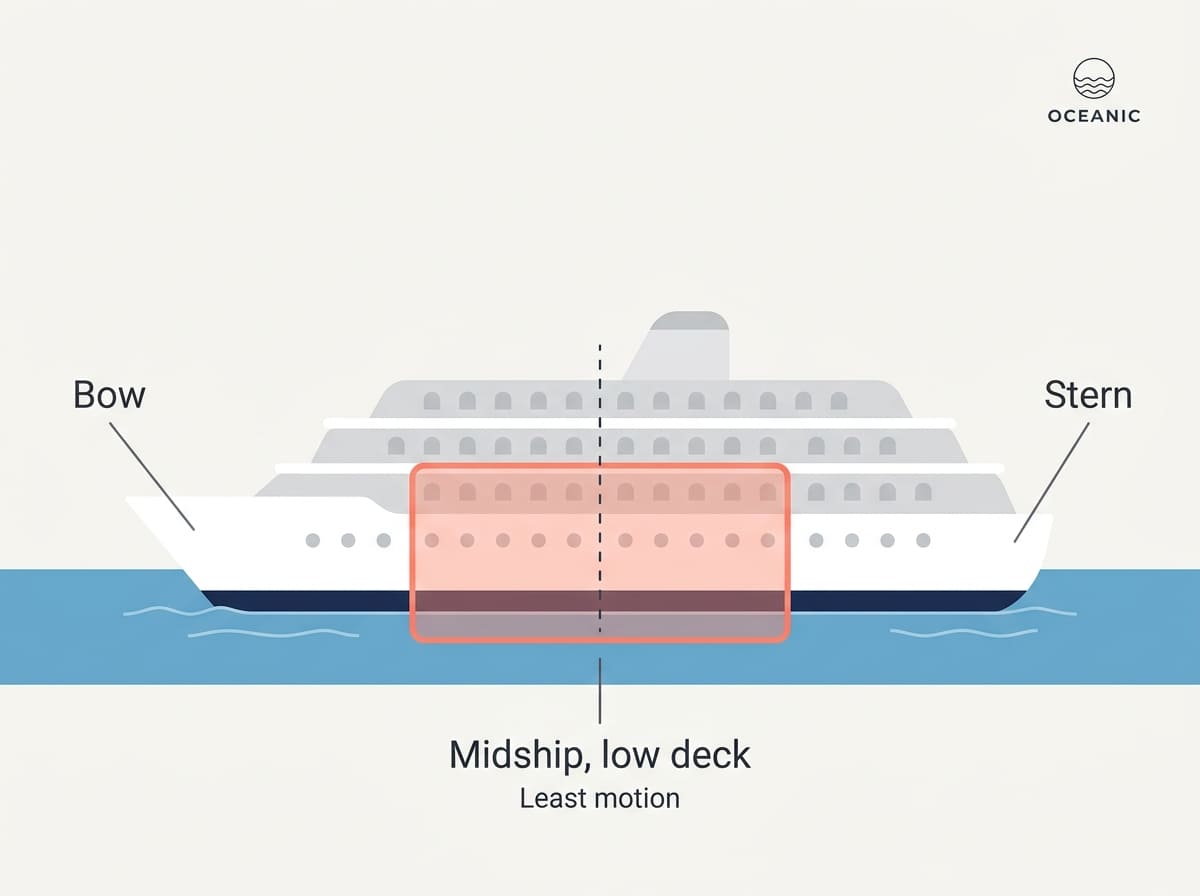
- Pick your spot on the ship. Midship and lower is steadiest, and the dining room or atrium on a lower deck is usually gentler than the top deck.
Which Cabin Is Best for Avoiding Seasickness?
Short answer: A midship cabin on a lower deck. The ship pitches and rolls around its center, so the middle and lower areas move the least. Aft cabins and high forward cabins feel more motion in rough seas, and the difference is real enough to matter if you are susceptible.
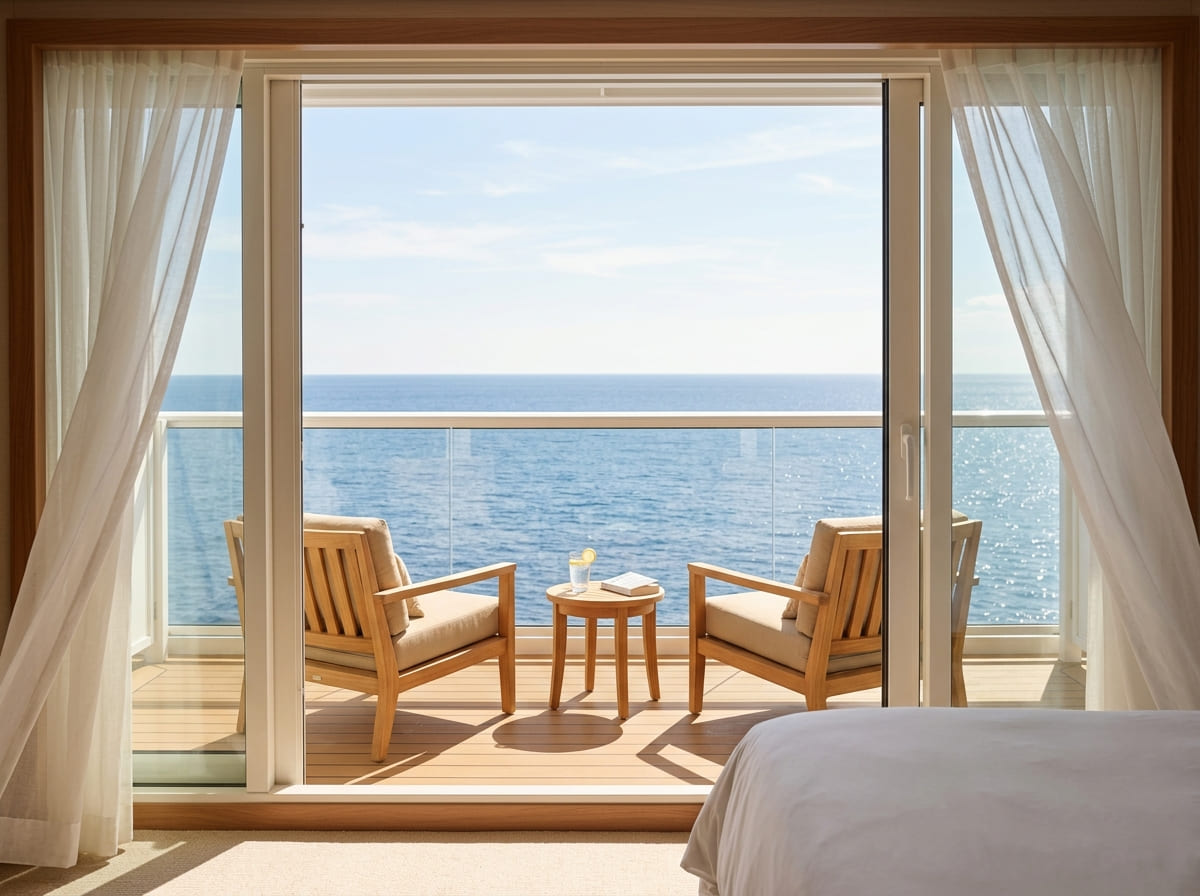
A cabin with a window or balcony also helps, because you can see the horizon. An inside cabin gives no visual reference, which some people find makes things worse. If you book a guaranteed cabin, the cruise line picks the location for you, so choose a specific midship stateroom if motion sickness is a concern.
When to Use the Ship's Medical Center
If you are genuinely ill, with nausea that will not settle or an inability to keep fluids down, go to the medical center. Doctors on board can give stronger anti nausea medicine such as promethazine by injection or suppository, which is often very effective when nothing else works. It can cause significant drowsiness.
Ship medical care is not included in your cruise fare, and fees vary by line, so ask what it will cost. Some ships also keep basic motion sickness tablets at guest services or in the shop, though availability and price vary. Travel insurance often covers onboard medical expenses, depending on the policy, so check yours before you sail.
Routes That Run Rougher Than Average
Not all itineraries are equal. You are more likely to feel motion on:
- Transatlantic crossings and other open ocean repositioning cruises
- New England and Canada itineraries, especially in the fall, when Atlantic weather turns less predictable. Ports such as Boston, Bar Harbor, Portland, Maine and Halifax are common stops
- One way Alaska itineraries that cross the Gulf of Alaska between the Inside Passage and Seward or Whittier
- Drake Passage crossings to Antarctica
- Northern Europe in autumn and winter
- Hawaii itineraries that include long open ocean sea days or channels between islands
Generally smoother options include:
- Typical Caribbean and Bahamas cruises, which are usually gentle, though winter cold fronts and the hurricane season (June through November) can add swells or change routes
- The protected waters of the Alaska Inside Passage. See our Glacier Bay cruise day guide and the Alaska and Pacific Northwest ports page
- Short Bermuda cruises, though the open ocean crossing from the East Coast can be bumpy at times
If you are on a smooth Caribbean itinerary and a bit nervous, the risk is low. Pack some meclizine just in case, choose a midship cabin and try not to overthink it. You can compare sailings in our cruise search.
What About Feeling Rocky After the Cruise?
Some people feel a swaying or rocking sensation for hours or days after stepping off a ship. It is often called "landsickness," and it usually fades on its own. If it lasts, or if it comes with other symptoms, talk to a doctor. Planning a calm day after you leave the ship helps, and our disembarkation day guide covers what to expect on the last morning.
Plan the Rest of Your Cruise
- What a guaranteed cabin is and whether to book one
- How cruise onboard credit works
- Cruise ship WiFi: what to expect and whether it is worth paying for
- What to expect on disembarkation day
- Glacier Bay, Alaska: what happens on your cruise day
- What to do in Kings Wharf, Bermuda
- What to do in Puerto Vallarta
- Shore excursions
- Cruise budget calculator
- Cruise FAQs
For more on motion sickness symptoms and treatment, see the National Library of Medicine's MedlinePlus guide to motion sickness.
Frequently Asked Questions
Does everyone get seasick on a cruise?
No. Most people do not get seasick on modern large cruise ships, particularly on calm Caribbean itineraries. Ships are big and stabilized, which dampens wave motion. Some people are more susceptible than others, and certain routes, such as transatlantic crossings and open ocean repositioning cruises, can be rough regardless.
What is the best seasickness medication for a cruise?
For people who know they are susceptible, the scopolamine patch (prescription) is the most effective choice for multiday cruises. For over the counter use, meclizine (Dramamine Less Drowsy or Bonine) is preferred for daytime because it is usually less sedating than original Dramamine. Talk to your doctor or pharmacist before sailing, especially if you take other medicines.
When should I put on a scopolamine patch for a cruise?
Apply it at least 4 hours before you need it. Many people put it on the evening before boarding so it is working when the ship sails. A single patch lasts up to 3 days, so longer cruises usually require a replacement behind the other ear. Follow your doctor's and the label's directions.
Do Sea Bands work for seasickness on a cruise?
Results are mixed. Some people find them helpful, but clinical evidence is inconclusive. They are cheap, drug free and low risk, so they are worth trying. If you are prone to serious motion sickness, use them alongside other measures rather than instead of them.
Which cabin is best to avoid seasickness on a cruise?
A midship cabin on a lower deck has the least motion, because the center of the ship is the most stable spot. Aft cabins and high forward cabins move the most in rough conditions. A window or balcony also helps because you can see the horizon.
What should I do if I get seasick on the ship?
Go outside and look at the horizon, get fresh air, sip water and eat something plain. Take your motion sickness medication if you have not already, following the label. If you cannot keep fluids down or the symptoms do not ease, visit the ship's medical center.
Can you still get seasick on a huge modern cruise ship?
Yes, though it is far less common. Large ships have stabilizers, but they cannot remove all motion, and rough weather or open ocean crossings can still make susceptible people feel unwell. Preparing in advance costs little and makes the trip more comfortable.