What to Do in Sitka, Alaska on a Cruise Day
Sitka is Alaska's most historically layered port, a Russian colonial capital, Tlingit homeland, and gateway to extraordinary wildlife and old-growth rainforest. Here is how to spend your cruise day here.
Sitka at a Glance
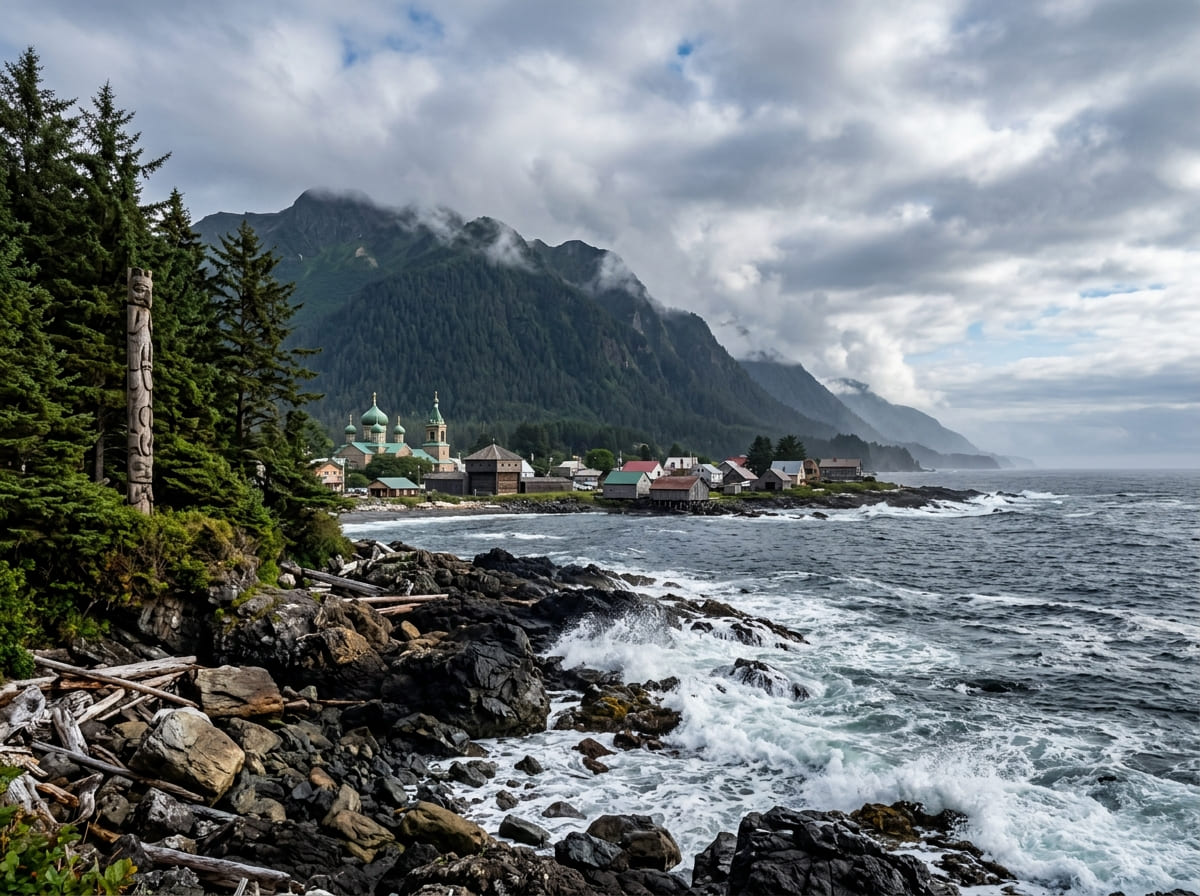
Sitka sits on the outer coast of Baranof Island facing the Pacific Ocean, the only major Alaska cruise port not on the sheltered Inside Passage. This means Sitka has a different character from Juneau, Ketchikan, and Skagway: it faces open ocean, sees more weather variation, and has a wilder, more remote feel despite being a city of about 9,000 people. It is also the most historically layered port in Alaska, with visible evidence of three distinct eras, Indigenous Tlingit, Russian colonial, and American territorial periods, all leaving marks that are still visible today. Sitka often sails alongside Juneau and Ketchikan on Inside Passage itineraries, and our Alaska cruise ports guide covers the whole route.
How you arrive in Sitka now depends on your ship. Sitka gained a new deep-water cruise terminal, the Sitka Sound Cruise Terminal at Halibut Point, and many large ships dock there directly rather than tendering, with a free shuttle running the roughly 5 to 6 miles into downtown in about 15 minutes. Smaller ships, or larger ships on busy days when multiple vessels are in port, still anchor in Sitka Sound and tender passengers to O'Connell Bridge or the dock near Crescent Boat Harbor closer to downtown. Check your specific ship's status, docked or anchored, before planning your day, since it changes both your travel time into town and your return logistics.
- Arrival: Either a direct dock at the Sitka Sound Cruise Terminal (Halibut Point, about 5 to 6 miles from downtown, free shuttle roughly 15 minutes) or a tender from anchor to downtown (roughly 10 to 15 minutes), depending on your ship and the day
- Currency: US Dollar (domestic port)
- Best for: Sitka National Historical Park, Russian history, bald eagles, whale watching, sea kayaking
- Typical time in port: 6 to 8 hours
- Walking distance from downtown landing: Historic downtown, walkable
Top Things to Do in Sitka on a Cruise Day
1. Sitka National Historical Park, Totem Pole Trail
The Sitka National Historical Park is one of Alaska's most beautiful and historically significant sites. The park marks the location of the 1804 Battle of Sitka, the last major battle between the Tlingit people and the Russian-American Company forces, and preserves a collection of totem poles along a trail through old-growth Sitka spruce forest beside the Indian River.
The totem pole trail is free to walk and takes about 45 minutes to an hour at a leisurely pace. The visitor center has excellent exhibits on Tlingit culture, the Russian period, and the 1804 battle. Indigenous artists carve in the cultural center adjacent to the visitor center, and it is often possible to watch active carving in progress. One of the most moving and atmospheric sites in all of Alaska. Free admission.
2. St. Michael's Cathedral
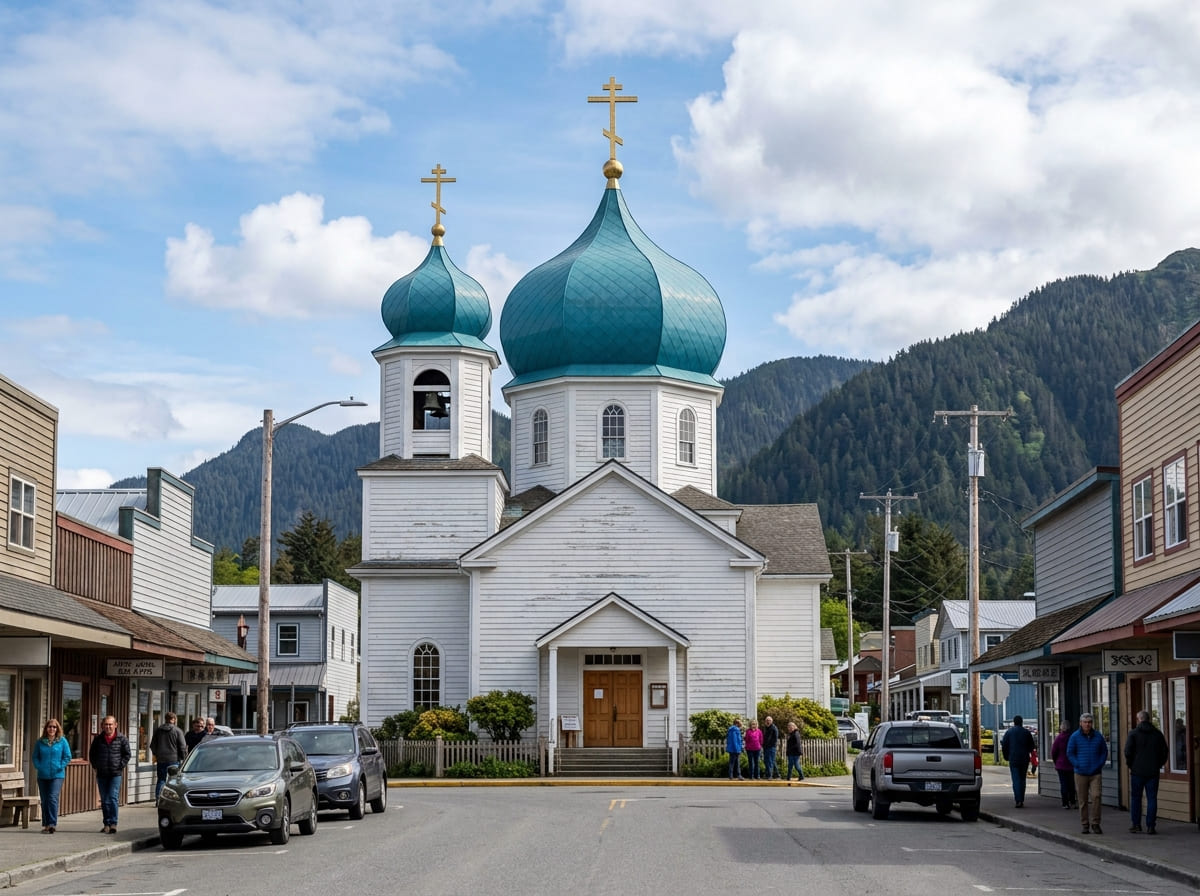
St. Michael's Cathedral on Lincoln Street is the centerpiece of Sitka's Russian heritage, a Russian Orthodox cathedral originally built in 1848, destroyed by fire in 1966, and faithfully reconstructed using the original plans. The interior contains an extraordinary collection of Russian icons, sacred vessels, and religious art that were saved from the 1966 fire by a human chain of Sitkans who passed objects out as the building burned. The cathedral is still an active Russian Orthodox parish. Admission is a small donation, and it is a remarkable piece of living history in the middle of a Southeast Alaska town.
3. Alaska Raptor Center
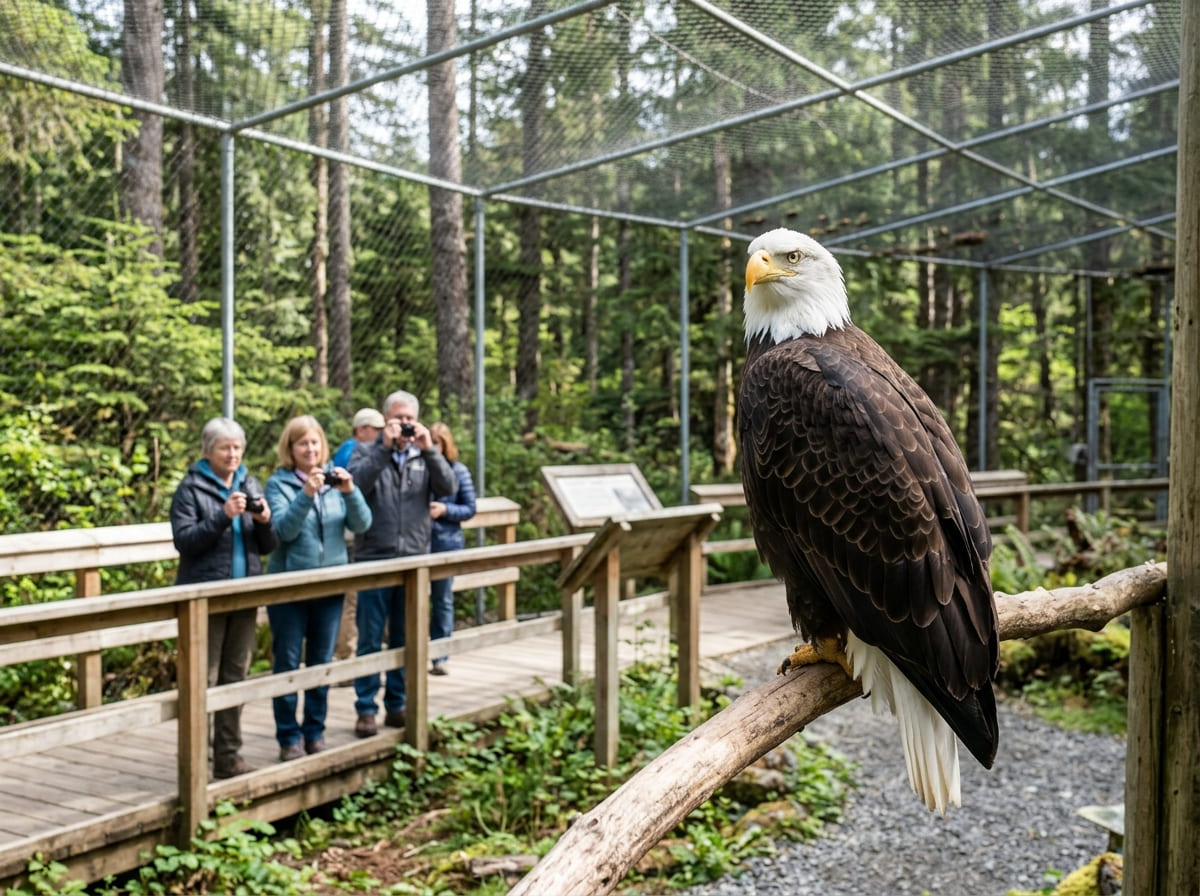
The Alaska Raptor Center is a rehabilitation facility for injured bald eagles, owls, and other birds of prey, and it is one of the most extraordinary wildlife encounters available from any Alaska cruise port, treating roughly 100 to 200 injured raptors a year. The center rehabilitates injured birds and returns them to the wild when possible; birds too injured for release become permanent residents and educational ambassadors. Visitors can walk through flight enclosures alongside bald eagles at very close range. The raptors are accustomed to humans and the proximity is extraordinary. Budget 1 to 1.5 hours. Admission approximately $15.
Show a bald eagle at close range inside a flight enclosure at the Alaska Raptor Center, wings partly spread, a visitor visible in soft focus in the background for scale. This is Sitka's single most striking wildlife experience and makes a powerful lead image. Format 16:9, bright daylight, high resolution.
Suggested alt text: A bald eagle at close range inside a flight enclosure at the Alaska Raptor Center in Sitka.
4. Sea Kayaking Around Sitka Sound
Sitka Sound and the surrounding island channels are exceptional kayaking territory, protected water, dramatic scenery, wildlife-rich, and accessible from the downtown landing area. Several operators run guided kayak tours ranging from 2-hour introductory paddles to longer half-day excursions. Wildlife commonly encountered from the water includes sea otters, harbor seals, Steller sea lions, bald eagles, and occasionally humpback whales in the outer sound. One of the most rewarding active excursions in Southeast Alaska.
5. Whale Watching in Sitka Sound
Sitka Sound's nutrient-rich Pacific waters support large aggregations of humpback whales, particularly in summer and early fall when herring and krill are abundant. Whale watching boats operate from the harbor and sightings are reliable, with operators commonly spotting multiple humpbacks on a single trip. The outer sound also has excellent sea otter viewing, since Sitka Sound has one of the largest sea otter populations in Alaska. A 3 to 4-hour whale watching excursion is one of the best ways to experience Sitka's marine environment.
Show a humpback whale surfacing or tail-slapping in Sitka Sound, open Pacific water and distant mountains in the background. This captures the article's marine wildlife section with a dramatic, high-interest image.
Suggested alt text: A humpback whale surfacing in Sitka Sound, Alaska.
6. Sheldon Jackson Museum
The Sheldon Jackson Museum on the campus of what was formerly Sheldon Jackson College holds one of Alaska's finest collections of Indigenous Alaska art and cultural objects, over 5,000 items representing Tlingit, Haida, Tsimshian, Aleut, Yup'ik, and other Indigenous cultures. The museum building itself, completed in 1897, is a National Historic Landmark. Admission is modest, around $5. If you are interested in Alaska Native cultures, this is a must-see, more comprehensive than the National Historical Park's collection and less visited by cruise passengers.
7. Crescent Harbor and the Waterfront
Crescent Harbor, near the downtown tender and shuttle landing, is a working small boat harbor with a mix of commercial fishing vessels and pleasure boats. The waterfront area has several excellent independent restaurants and coffee shops. Ludvig's Bistro on Katlian Street is one of the most celebrated restaurants in all of Alaska, a small, intensely local seafood restaurant that is worth a meal if you can get a table at lunch. For a quick waterfront meal, the local halibut fish and chips is a Sitka staple.
Show the working harbor at Crescent Harbor, fishing boats and pleasure craft moored together, downtown Sitka's waterfront buildings and mountains behind. This grounds the practical dining and waterfront section in a real, local scene.
Suggested alt text: Fishing boats moored at Crescent Harbor in downtown Sitka, Alaska.
Getting Around Sitka
If your ship docks at the Sitka Sound Cruise Terminal at Halibut Point, a free shuttle bus runs the roughly 5 to 6 miles into downtown in about 15 minutes; pre-booking a shuttle time slot online is recommended, since it runs on a schedule rather than continuously. If your ship anchors instead, the tender brings you directly to O'Connell Bridge or the dock near Crescent Harbor, right in the heart of downtown. Either way, once you are downtown, Sitka's historic core is compact and walkable, with the National Historical Park, St. Michael's Cathedral, and Sheldon Jackson Museum all within comfortable walking distance of each other. The Alaska Raptor Center is about 1.5 miles from downtown, manageable on foot or a short taxi ride. Most whale watching and kayak operators pick up near the downtown landing area.
Tips for Your Sitka Port Day
- Confirm whether your ship is docking or anchoring before planning your day, since this changes your shuttle or tender time and your return logistics at the end of the day.
- The National Historical Park totem trail is free and unmissable, so allow 1.5 hours for the trail and visitor center.
- The Alaska Raptor Center is extraordinary, since bald eagles at arm's length is a once-in-a-trip experience, so budget time for it.
- Sitka faces the open Pacific, so weather can be rougher than Inside Passage ports; bring a proper rain layer.
- Build in extra buffer for your return, whether that means a scheduled shuttle back to Halibut Point or a tender queue at a busy downtown landing, particularly on days with multiple ships in port.
- Ludvig's Bistro for lunch if you can get a table, genuinely one of Alaska's best restaurants.
- Sitka gets fewer ships than Juneau or Ketchikan, so the historic downtown feels less overrun by cruise passengers, which is part of its appeal.
Sitka FAQs for Cruise Passengers
Why is Sitka historically significant?
Sitka was the capital of Russian America, the Russian colonial territory that included most of present-day Alaska. The Russian-American Company established New Archangel, present-day Sitka, as its headquarters in 1804 after defeating the Tlingit Kiks.ádi clan at the Battle of Sitka. Sitka remained the colonial capital until the United States purchased Alaska from Russia in 1867, and the formal transfer ceremony took place at Sitka's Castle Hill. The town preserves more tangible Russian heritage than any other place in the United States.
What is the Alaska Raptor Center?
The Alaska Raptor Center is a nonprofit raptor rehabilitation facility in Sitka that treats injured birds of prey, primarily bald eagles, but also owls, hawks, and other species, roughly 100 to 200 birds a year. Birds that recover fully are released back to the wild; those with permanent injuries remain as permanent residents and education ambassadors. Visitors can walk through outdoor flight enclosures alongside these birds at very close range. It is one of the most extraordinary wildlife encounters available at any cruise port.
Does Sitka have a cruise pier now, or is it still a tender port?
Both, depending on the ship. Sitka now has a deep-water cruise terminal, the Sitka Sound Cruise Terminal at Halibut Point, and many large ships dock there directly, with a free shuttle running into downtown, about 5 to 6 miles away, in roughly 15 minutes. Smaller ships, or larger ships on busy multi-ship days, still anchor in Sitka Sound and tender passengers directly to downtown at O'Connell Bridge or near Crescent Harbor. Check your ship's specific status for the day, whether docked or anchored, since it changes your travel time both ways.
Can you see the Northern Lights in Sitka?
Sitka's latitude, around 57°N, puts it on the southern edge of the auroral zone. Northern Lights sightings are possible in Sitka but not reliable, since they require dark skies, meaning late fall through early spring, solar activity, and clear weather. Alaska cruise season, roughly May through September, coincides with extended daylight hours, which makes Northern Lights viewing essentially impossible in Sitka during cruise season. For Northern Lights, winter trips to Fairbanks or the Interior are far more productive.