An Alaska cruise itinerary isn't a single destination — it's a collection of completely different places, each with its own character, its own best activities, and its own logistics. The mistake most first-time Alaska cruisers make is treating every port day the same way. They don't warrant the same approach.
Juneau is a city with restaurants, bars, and world-class whale watching. Sitka is a quiet gem that rewards slow exploration on foot. Skagway is about history and mountain scenery. Icy Strait Point is purpose-built for cruise passengers and best experienced through specific activities. Ketchikan packs an enormous amount into a small walkable area around the docks.
This guide covers every major Alaska cruise port in detail — what makes each one distinct, what's worth doing, and how to make the most of however long your ship gives you ashore.
Alaska Cruise Departure Ports
Before the port days begin, you board from one of several Alaska embarkation points depending on your itinerary.
Seward, Alaska
Seward is the primary embarkation port for one-way northbound Alaska cruises — ships sail from Vancouver or Seattle to Seward, where passengers disembark and typically fly home from the Ted Stevens Anchorage International Airport (about 2.5 hours north). Seward itself is a spectacular small town on Resurrection Bay with excellent wildlife viewing, hiking, and the Alaska SeaLife Center.
If your cruise ends in Seward and you have time, spending a night before flying home is well worth it. Kenai Fjords National Park departs from Seward's small boat harbour and offers some of the best wildlife cruising in North America — sea otters, orcas, humpbacks, and massive seabird colonies at the Chiswell Islands.
See our full Seward cruise port guide for embarkation day logistics and what to see if you have time.
Whittier, Alaska
Whittier is the other major embarkation/disembarkation port for one-way Alaska cruises. It's a tiny community — population under 300 — accessible only by the Anton Anderson Memorial Tunnel (the longest highway tunnel in North America) or by water. There's not much to do in Whittier itself, but the mountain scenery is stunning and some cruise lines offer pre-cruise tours through the tunnel to Anchorage.
See our Whittier cruise port guide for what to expect on embarkation day.
Southeast Alaska Port Days
Juneau — The Most Visited Alaska Port
Juneau is the capital of Alaska and the most visited cruise port in the state. It's also one of the most unusual capital cities in the world — accessible only by air or sea, surrounded by the Tongass National Forest and the Juneau Icefield, with a compact downtown that's eminently walkable from the cruise docks.
What makes Juneau different: The combination of urban infrastructure (good restaurants, bars, a proper downtown) and extraordinary wilderness access. You can go whale watching, fly over the Mendenhall Glacier by helicopter, hike to mountain viewpoints, or simply walk the historic downtown — all within a typical 8-hour port call.
Don't miss: Whale watching from Juneau is among the most reliable in Alaska. Humpback whales feed in the channels around Juneau throughout the summer, and most whale watching tours have high success rates. Book in advance — this is the most popular excursion at the most visited Alaska port.
Skip: The Mendenhall Glacier visitor area can feel crowded on peak days when multiple ships are in port simultaneously. Consider a helicopter or floatplane glacier tour instead if budget allows — the aerial perspective is extraordinary and tour group sizes are small.
Time needed: 6–8 hours for a well-paced day. Juneau rewards more time than most ports get.
See our complete Juneau cruise port guide for excursions, dining, and logistics.
Ketchikan — Totem Poles, Rainforest & Salmon
Ketchikan bills itself as the "Salmon Capital of the World" and the "First City of Alaska" — the first major port northbound ships reach after leaving Washington or British Columbia. It's compact, walkable from the docks, and has more to offer per square foot than almost any other Alaska port.
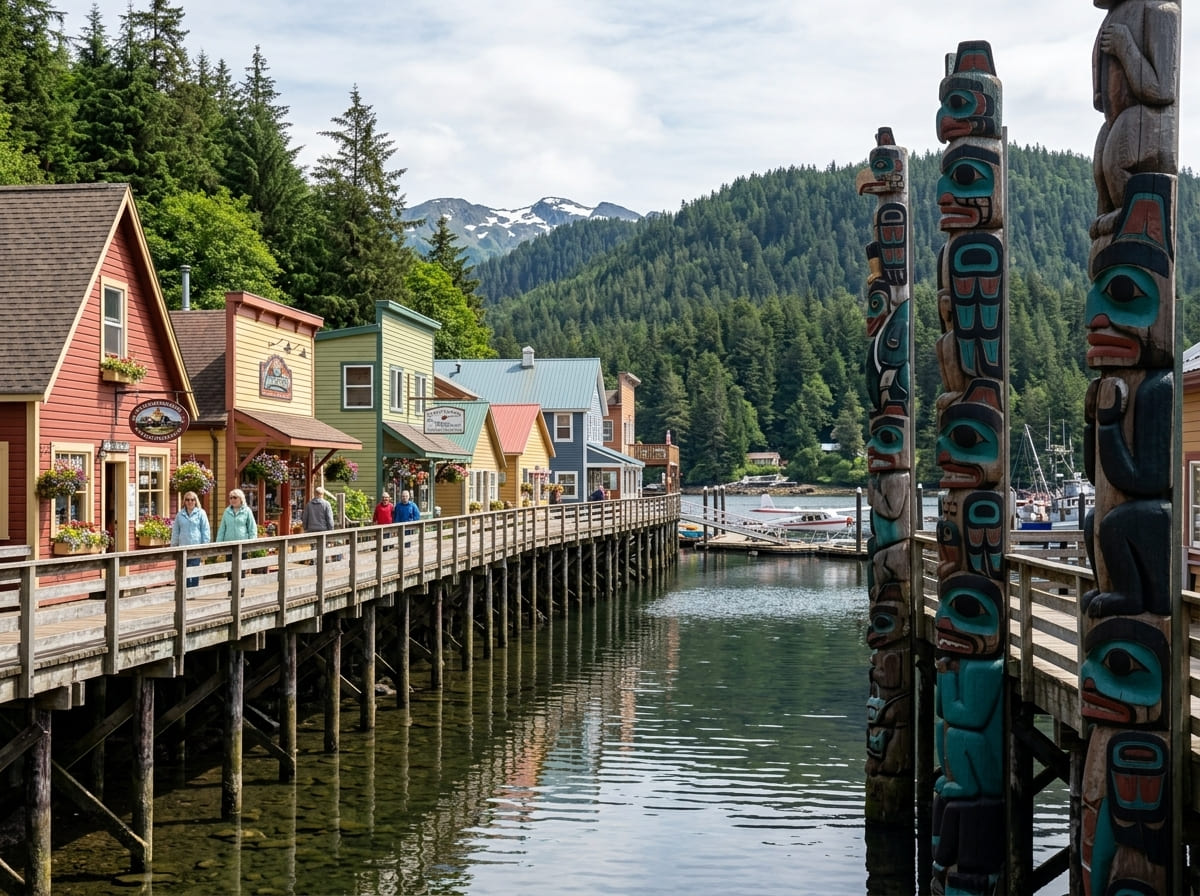
What makes Ketchikan different: The combination of indigenous Tlingit and Haida culture (more totem poles per capita than anywhere in the world), the historic Creek Street district now converted to charming shops and restaurants, and Creek Street itself — a boardwalk built over Ketchikan Creek where you can watch salmon fight upstream in season.
Don't miss: Totem Bight State Historical Park (a short drive from downtown, with authentically restored poles and a stunning clan house) and Saxman Native Village for the largest collection of standing totem poles in the world. Both are worth the taxi or excursion fare.
Wildlife note: Misty Fjords National Monument — accessible by floatplane or boat from Ketchikan — is one of Alaska's most spectacular and least-visited wilderness areas. Day trips are available as excursions and represent genuinely extraordinary scenery.
Time needed: 4–6 hours covers downtown and one major excursion. Ketchikan doesn't require as much time as Juneau.
See our Ketchikan cruise port guide for what to do and excursion recommendations.
Skagway — Gold Rush History & Mountain Scenery
Skagway is the most historically significant of the major Alaska cruise ports — a town that exploded to 20,000 people during the 1898 Klondike Gold Rush and has barely changed since. Most of the original buildings on Broadway are preserved or restored, the entire downtown is a National Historic Park, and the ranger-led walking tours are genuinely excellent.
What makes Skagway different: It's the only Alaska port where the primary draw is history rather than wildlife or scenery — though the mountain scenery is spectacular. The White Pass & Yukon Route Railway is one of the great historic railway journeys in North America, climbing from sea level to 2,865 feet through dramatic mountain scenery.
Don't miss: The White Pass Summit excursion by train or bus. The views are extraordinary and the history of the Chilkoot Pass — where stampeders climbed 1,500 steps cut into the ice — is told compellingly throughout.
Be aware: Skagway gets a lot of cruise ship traffic and the downtown can feel like a curated tourist experience. Venture beyond the souvenir shops on Broadway to the Klondike Gold Rush National Historical Park visitor centre for the genuine historical substance.
Time needed: 4–6 hours. Downtown is walkable in 90 minutes; the railway excursion takes most of the day.
See our Skagway cruise port guide.
Sitka — Alaska's Hidden Gem Port
Sitka is consistently rated by experienced Alaska cruisers as their favourite port — and consistently overlooked by first-timers who've never heard of it. Located on the outer coast of Baranof Island facing the Pacific (rather than the protected Inside Passage), Sitka has a completely different character from the other Southeast ports.
What makes Sitka different: Russian colonial history (Alaska was Russian territory until 1867, and Sitka was its capital), extraordinary wildlife access, and a genuine small-town atmosphere that hasn't been entirely shaped around cruise passenger spending. The Alaska Raptor Center rehabilitates injured bald eagles — visitors can get within metres of birds that cannot be released to the wild.
Don't miss: St. Michael's Cathedral (the Russian Orthodox church in the town centre), Sitka National Historical Park with its totem poles and the site of the 1804 battle between Russian colonisers and Tlingit warriors, and the Alaska Raptor Center.
Wildlife note: Sea otter viewing is exceptional from Sitka — they congregate in the kelp beds just offshore and are regularly visible from the waterfront park. Whale watching is also excellent from Sitka.
Time needed: 6–8 hours. Sitka is small enough to walk but has more depth than it appears.
See our Sitka cruise port guide.
Icy Strait Point — Wildlife and the World's Longest ZipRider
Icy Strait Point is the only Alaska cruise port owned and operated by a Native Alaskan corporation — the Huna Totem Corporation, representing the Huna Tlingit people of Hoonah. It opened in 2004 and has become one of the most distinctive stops on Alaska cruise itineraries.
What makes Icy Strait Point different: It's a purpose-built cruise destination in the best sense — thoughtfully developed with the local community in mind, with genuine cultural programming alongside the adventure activities. The ZipRider (a mile-long zipline from the mountaintop to the waterfront) is the longest in the world and one of the most memorable Alaska cruise excursions.
Don't miss: Brown bear watching in the estuary and meadows around Hoonah. Icy Strait Point has exceptional brown bear sighting rates — the bears come to fish for salmon in season. The Huna Heritage Museum provides excellent cultural context.
Wildlife note: Humpback whale populations in Icy Strait are among the highest in Southeast Alaska. Whale watching tours from Icy Strait Point have outstanding success rates.
Time needed: 4–6 hours. Plan around your chosen activity — the ZipRider and whale watching each take 2–3 hours.
See our Icy Strait Point guide.
Scenic Cruising Days
Most Alaska itineraries include at least one scenic cruising day — a day at sea navigating through spectacular wilderness areas without a port stop. These days are not wasted time. They're often the most memorable of the trip.
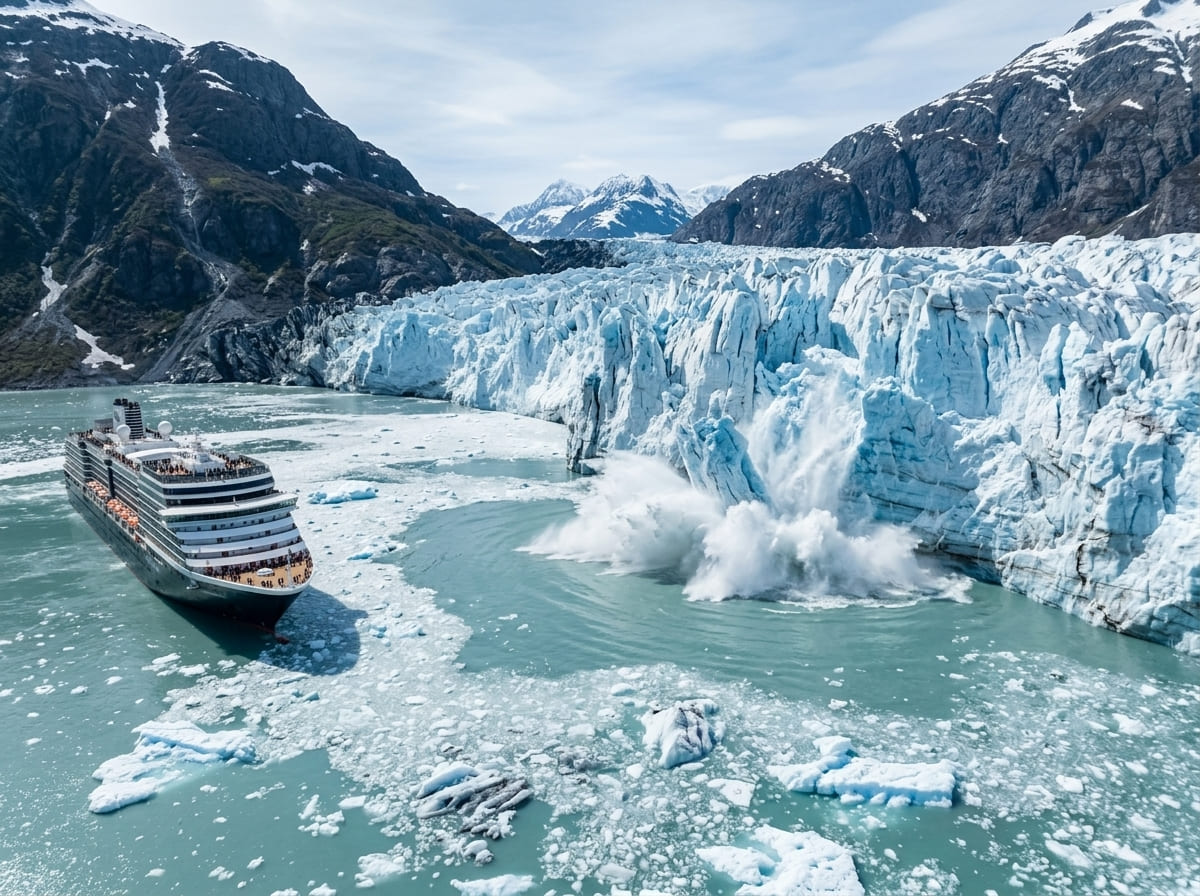
Tracy Arm Fjord
The most frequently included scenic cruising day on Inside Passage itineraries. Tracy Arm is a 30-mile glacier fjord south of Juneau where 3,000-foot granite walls rise from the water and ships push through floating ice to approach the Sawyer Glaciers. It's extraordinary on a clear day and still deeply impressive in fog.
See our complete Tracy Arm Fjord guide for what to expect, the best viewing decks, and how ship size affects your experience.
Glacier Bay National Park
Glacier Bay is a UNESCO World Heritage Site accessible only to a limited number of cruise ships per season — not all itineraries include it. Ships that do receive a Glacier Bay permit typically spend a full day navigating the bay, with a park ranger boarding the ship to provide commentary. The bay contains 16 tidewater glaciers and is one of the world's most active glacial environments.
See our Glacier Bay cruise guide.
Planning Your Alaska Cruise: Key Decisions
A few questions that shape the Alaska cruise experience significantly:
Roundtrip or one-way? Roundtrip sailings from Seattle or Vancouver visit the same ports in both directions. One-way sailings (Vancouver/Seattle to Seward or Whittier, or vice versa) cover more ground and include the Gulf of Alaska crossing, which offers different scenery and wildlife. One-way requires flying one end, which adds cost and logistics.
When to go? June and early July offer the best wildlife activity (whale feeding peaks, bear cubs are visible) and reliable weather. Late July through August is peak season with the most activity but more crowds. May is quieter and cheaper but some areas are just opening. See our guide to the best time to cruise Alaska.
Which ship size? Smaller ships reach places larger ones can't — Tracy Arm, some Glacier Bay anchorages, and occasional stops at small communities like Wrangell or Petersburg. If the remote experience matters to you, ship size is worth considering when you book.
Frequently Asked Questions
How many ports does a typical Alaska cruise visit?
Most 7-night Alaska cruises include 3–4 port stops plus 1–2 scenic cruising days. Common combinations include Juneau + Ketchikan + Skagway with Tracy Arm scenic cruising, or Juneau + Sitka + Icy Strait Point with Glacier Bay.
Do I need excursions at every Alaska port?
Not necessarily. Ketchikan and Skagway downtown areas are highly walkable and rewarding without a booked excursion. Juneau and Sitka both have free or low-cost independent options. Icy Strait Point is specifically designed around excursions and has less to do independently. Glacier Bay and Tracy Arm are ship-only experiences. Our guide to whether excursions are worth it can help you decide.
What should I pack for Alaska cruise port days?
Layers are essential — Southeast Alaska weather changes quickly and the temperature difference between ship, port, and fjord can be 15–20 degrees. A waterproof outer layer, warm mid-layer, comfortable walking shoes, and rain-resistant pants cover most port day scenarios. Binoculars significantly enhance wildlife viewing.
Which Alaska port has the best whale watching?
Juneau, Sitka, and Icy Strait Point all have excellent whale watching. Juneau has the most operators and the most departure times. Icy Strait Point has some of the highest success rates in Southeast Alaska. For the best chances, book with a dedicated wildlife tour operator rather than a general sightseeing tour.
Is Alaska worth cruising versus land travel?
For most travellers, yes — cruise ships access wilderness areas that are impractical to reach by road, the logistics of Southeast Alaska (where most ports are not road-connected) are handled entirely by the ship, and the value relative to equivalent independent travel is excellent. The one trade-off is depth — port days give you 6–8 hours in each place, which is enough for a meaningful experience but not enough to go deep on any single destination.