- One-way cruises let you embark at one port and disembark at another, offering more flexibility and the chance to explore two distinct regions without backtracking.
- Repositioning cruises, a common type of one-way voyage, are often more affordable per day than traditional round-trip cruises due to their less conventional routes.
- One-way cruises require extra planning for transportation logistics, including arranging flights or transfers to and from different ports, which can add to overall costs.
- Popular one-way cruise routes include Alaska, the Mediterranean, and transatlantic crossings, available from major lines like Norwegian, Royal Caribbean, Princess, and Cunard.
There are a lot of tips and tricks for getting the most out of your cruise vacation, but what do you do if you want to stay in port a little longer, enjoying your destination? A one-way cruise, or a repositioning cruise, may be the perfect solution for you.
One-Way Cruises: A Flexible Alternative to Round-Trip Voyages
Cruises are often synonymous with round-trip itineraries, where passengers embark and disembark at the same port. However, one-way cruises—where you board at one port and end your journey at another—are a compelling option for travelers seeking flexibility, unique itineraries, or a way to combine cruising with other travel plans.
As of October 2025, one-way cruises are widely available, particularly on routes like Alaska, the Mediterranean, and transatlantic crossings. This article explores what one-way cruises entail, their benefits, and how to book one.
What Is a One-Way Cruise?
A one-way cruise, also called a point-to-point or open-jaw cruise, involves embarking at one port and disembarking at a different one. Unlike round-trip cruises, which return to the starting port, one-way cruises allow passengers to cover more ground, often spanning multiple regions or countries. For example, you might board in Vancouver, Canada, and disembark in Seward, Alaska, or sail from Barcelona, Spain, to Civitavecchia (Rome), Italy. These cruises are popular for repositioning voyages (when ships relocate seasonally) or itineraries designed to explore diverse destinations without looping back.Benefits of One-Way Cruises
One-way cruises offer unique advantages. First, they allow travelers to explore two distinct regions without backtracking, ideal for those wanting to extend their trip with land-based travel. For instance, after a one-way Alaska cruise, you could spend a week touring Denali National Park. Second, they often feature unique ports or longer itineraries, such as transatlantic crossings from Southampton, UK, to New York City. Third, repositioning cruises, a common type of one-way voyage, are often more affordable per day due to their less conventional routes. Finally, they provide flexibility for multi-destination vacations, letting you pair a cruise with flights, trains, or road trips.What One-Way Cruises Entail
One-way cruises require more planning than round-trips. Transportation Logistics: You’ll need to arrange travel to the embarkation port and from the disembarkation port. For example, a cruise from Miami to Lisbon might require a flight to Miami and a return flight from Lisbon. Cost Considerations: While cruise fares for one-way trips can be competitive, additional costs like one-way flights or transfers can add up. Itinerary Planning: One-way cruises may have more sea days (e.g., transatlantic voyages) or intensive port stops, so check the schedule to ensure it matches your pace. Visa and Documentation: Crossing international borders may require visas or specific travel documents, depending on the ports. [caption id="attachment_18975" align="aligncenter" width="604"] Quebec City, Canada[/caption]
How to Book a One-Way Cruise
- Research Cruise Lines and Routes: Major lines like Norwegian, Royal Caribbean, Princess, and Cunard offer one-way cruises. Use cruise line portals to filter for “one-way” or “repositioning” itineraries. Popular routes include Alaska (Vancouver to Seward), Caribbean to Europe (e.g., Miami to Barcelona), and Asia to Australia.
- Check Schedules and Seasons: One-way cruises peak during repositioning seasons (spring and fall for transatlantic; May-September for Alaska). Check schedules on cruise line websites or with travel agents.
- Book Transportation: Use platforms like Skyscanner or Google Flights to secure one-way flights or train tickets to and from the ports. Book early for better fares, especially for long-haul flights.
- Consult a Travel Agent: Agents specializing in cruises can find deals and handle logistics, including transfers and pre/post-cruise hotel stays.
- Verify Documentation: Check visa requirements for all countries on the itinerary using government travel websites (e.g., travel.state.gov for U.S. citizens).
- Plan Post-Cruise Activities: Leverage the destination port for further travel. For example, disembarking in Rome allows for a land tour of Italy.
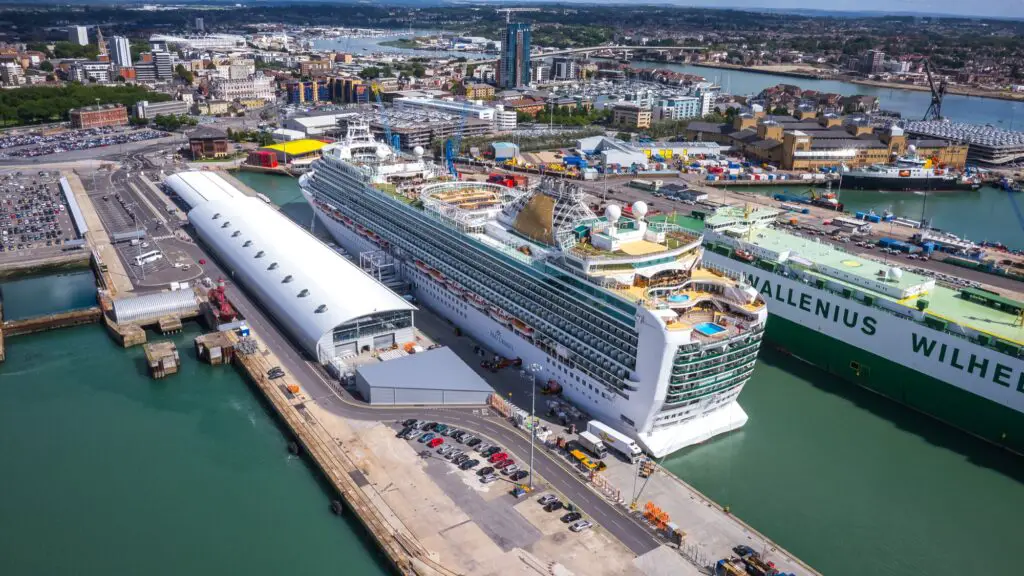 Ocean Cruise Terminal, Credit: cruisesouthampton.com[/caption]
Tips for a Smooth Experience
- Pack Smart: Ensure luggage suits both the cruise and any post-cruise plans, as you won’t return to the starting point.
- Budget for Extras: Factor in costs for transfers, flights, or accommodations at the end port.
- Check Cruise Line Policies: Some lines offer packages with one-way transfers or flight deals for repositioning cruises.
A Repositioning Cruise vs. A One-Way Cruise
A repositioning cruise and a one-way cruise are two different things but are often presented as the same. If a cruise line is offering such a cruise, ask them questions about the type of cruise it is before booking. Repositioning cruises are usually less expensive than a one-way cruise, but you have less control over ports of call in a repositioning cruise.A Repositioning Cruise
Typically, a repositioning cruise is when the embarkation port and the disembarkation port are different, a repositioning cruise is like a one-way ticket. These types of cruises are less common than destination cruises, but they can also be less expensive. Cruise ships will need to reposition their ships depending on the season. One example is Alaskan cruises. During the winter, ships do not cruise to Alaska. Most Alaskan cruises are from late spring to early autumn. When winter approaches in Alaska, cruise ships will need to move, or reposition, elsewhere. And that is when you could pick up a cruise that starts in Alaska and ends elsewhere. Cruises might operate in Mediterranean and Europe for a season, and then reposition by sailing into North or South America for another season. A cruise line prefers not to reposition empty ships from one location to another. Cruise lines will offer passengers the opportunity to take a repositioning cruise at a rate that is less expensive than a destination cruise. These transfers can be two or more weeks in length. The majority of repositioning cruises are not direct routes, but cruise lines will schedule interesting ports along the way to entice guests to sail along with them. Again, these voyages tend to be two weeks or more as the ships are crossing oceans or changing hemispheres. Here's a look at some of the more common Spring (March-May) repositioning cruise routes: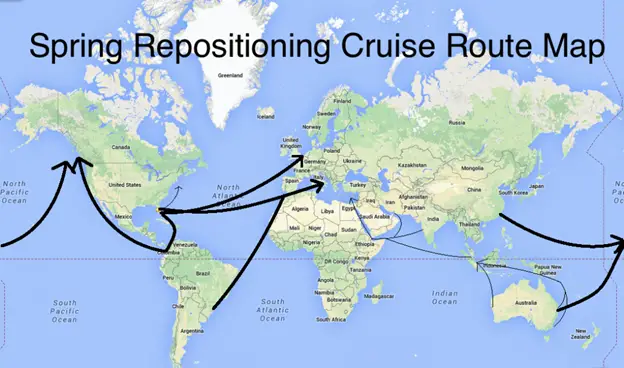
- Caribbean, Florida, and other Southern US ports to European ports
- Caribbean, Florida, and other Southern US ports to Pacific Northwest ports such as Vancouver
- South America to Europe (less frequent and often European lines)
- Australia to Asia (particularly Singapore)
- Asia/Oceania to Pacific Northwest (less frequent)
- Other: Every once in a while, there is just an odd repositioning route in which a cruise line may be repositioning a ship not just for a season, but changing a ship's itinerary on a more permanent basis. Or they may just be less common repositioning cruise routes. Use some creative search filters and find these unique voyages, which may pack a very rare and interesting repositioning cruise itinerary. We've seen some interesting itineraries, for example, from Australia through the Pacific islands to Hawaii!
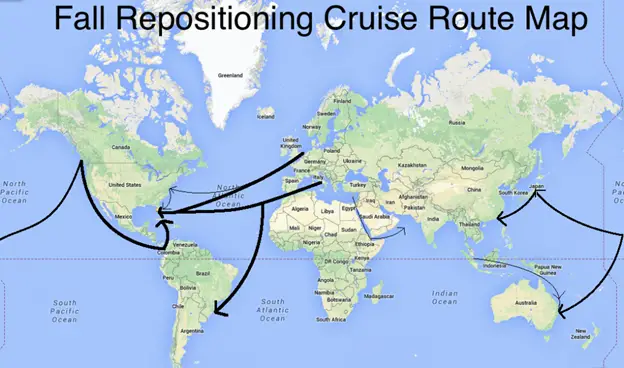
- Europe to the Caribbean, Florida, and other Southern US ports
- Pacific Northwest (e.g., Vancouver) to the Caribbean, Florida, and other Southern US ports.
- Europe to South America ports (less frequent and often European lines)
- Asia (particularly Singapore) to Australia
- Pacific Northwest to Asia/Oceania (less frequent)
- Other: Every once in a while, there is just an odd repositioning route in which a cruise line may be repositioning a ship not just for a season, but changing a ship's itinerary on a more permanent basis. Or they may just be less common. Use some creative search filters and find these unique voyages, which may pack a very rare and interesting itinerary.
A One-Way Cruise
As you might have guessed, a one-way cruise starts at one point and ends at another. Most cruises tend to be round trips, where you start and end at the same point. Just as with a repositioning cruise, you will need to plan to be able to get yourself back to your point of origin. For those who have the luxury of time, this is a wonderful way to really explore a new place at the beginning or end of your cruise. You can immerse yourself and truly learn what that port city is like. Some travelers feel they may only get to a chosen port once in their life. By being able to spend time there, you can truly absorb the sights and the culture. The downside is that there is less flexibility with a one-way cruise. Not every cruise line offers one-way cruises, and some may only be offered at only certain times of the year. However, if you plan your vacation well enough in advance, you should be able to find the cruise you’re looking for.Where Can I Go On A Repositioning or One-Way Cruise?
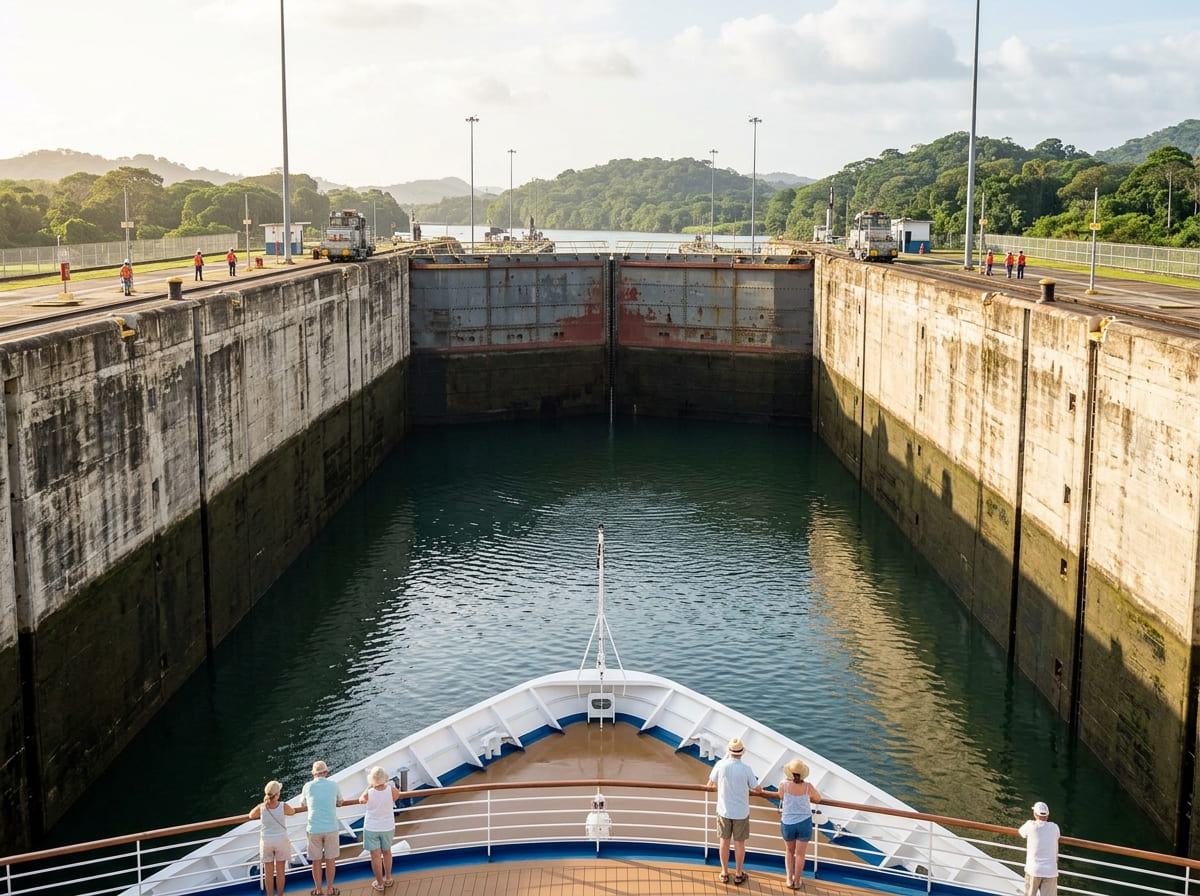
For the traveler looking to embark and disembark in the United States, you may look into a cruise that goes through the Panama Canal. You can sail from Florida, tour the Canal, and arrive in Los Angeles. Once there, you can spend a little time at the Santa Monica Pier, stroll down Rodeo Drive, or hike up to the Hollywood sign. If you live in LA, you could plan your trip in reverse. Fly to Florida, do your sightseeing beforehand, and take a relaxing, leisurely cruise home. Feeling a little more adventurous? Try cruising from the U.S. to Quebec and spend some time in our neighboring country, Canada, before coming home. You can get a taste of Old Quebec City by exploring the Petit-Champlain District, which dates back to the 1600s. Or, take a day to do a little whale watching. That is one of the perks of a repositioning cruise. Rather than an itinerary mapped out for you, you are the one who can choose what you would like to do and see. If you have the time, try a transatlantic, repositioning cruise. Get on the ship in New York, and sail across the ocean to places like Spain, France, and England. Enjoy the sandy beaches of Ibiza, a romantic gondola ride in Venice, or an enlightening walking tour in the historic streets of London. You could also spend a little time in Hong Kong before hopping on a 13-day cruise through Southwest Asia over to Thailand where you can see some of the beautiful beaches in Phuket. Or get on the ship in Rome, and go for an Arabian adventure that sees you through Egypt, Israel, Greece, and other places that many people dream of seeing.When Is The Best Time For Repositioning Cruises?
The information below, with maps of cruise routes for spring and fall, came from https://www.roamingaroundtheworld.com/, and we appreciate their input. The transatlantic repositioning cruises listed below are the most common routes. But there are many more repositioning cruise routes that happen during these seasonal times.Other Things To Know About A Repositioning Cruise
There Are Still Lots of Activities On a Repositioning or One-Way Cruise
While both repositioning and one-way cruises may be less expensive than a round-trip cruise, you can expect all the same amenities and activities as a round-trip cruise. There are complimentary dining options, activities, and entertainment just as a round-trip cruise would have. Cruise lines strive to fill their ships with passengers, even at reduced rates when they reposition their ships, and so they make the prospect attractive by providing the same level of entertainment that you would expect on a round-trip cruise. Comedians, Broadway performers, and singers will still be put on in the evenings. Some cruises will add lectures on a variety of subjects like marine life, astronomy, cultures, or even cooking demonstrations. There are still typical activities like bingo and trivia games. You will spend more days at sea, and there will still be ports of call. There are times when these ports are not the usual ports that are typically stopped at by cruises. This means that you may be seeing destinations that are not your run-of-the-mill stops. All of the other options on a cruise ship, like the swimming pools, rock climbing walls, water slides, and everything else on that particular cruise line are available. On a repositioning cruise, there tends not to be long lines or much of a wait for these activities.You Will Need A Return Ticket
As was mentioned before, your starting point of the journey and your stopping point will be two different locations. You will need to get yourself back home whether it be by flying or renting a car depending on where your final stop is. This is going to add to the overall cost of your trip, but if you look for flights in the off-season, it can be well worth the time you put into researching cruises and flights.Repositioning Cruises Tend To Be Longer In Duration
Round-trip cruises can be a week or less, while transatlantic repositioning cruises can be about two weeks. Transpacific cruises can be three weeks or longer.Who Travels On Repositioning Cruises?
As you might expect, with the duration of repositioning cruises, a good portion of the passengers will be the over-60 crowd. They are the people with a bit of time on their hands and want some adventure. They also tend to be savvy travelers who know about getting the most out of your vacation dollar. Others on a repositioning cruise might be professionals who are freelance or remote workers, others on a sabbatical, or those who are relocating might also take advantage of one of these cruises. Those who are wanting to continue to work while on the water, will need to know that WiFi on a cruise can be problematic. It can be slow and expensive as it runs off a satellite signal.One-Way Cruises
Not all transatlantic cruises are for repositioning. Cunard’s Queen Mary 2 Luxury Cruise Ship crosses the Atlantic several times a year. These one-way cruises are an alternative to flying between North America and Europe. You can also cruise from Quebec, Canada to Boston one way. These cruises typically sail from May through October, with the most popular time being August when the trees start to turn colors. Norwegian Cruise Line, Carnival, and Royal Caribbean cruise lines offer Canada/New England one-way trips in the fall for the foliage. There are seasonal one-way cruises that sail southbound from either Seward or Whittier, Alaska, or northbound from Vancouver. One of the advantages of a one-way cruise is that it offers you time in the disembarkation port. Holland America, Royal Caribbean, and luxury lines like Silversea and Regent Seven Seas Cruises offer one-way sailing. Just as with a repositioning cruise, you will need to provide your transportation back home.Some Final Thoughts
Do a bit of research with the cruise line that you would like to sail with, and see if they have any one-way or repositioning cruises on their schedule. If you find one that will suit your taste and fit into your schedule, book your reservations ahead of time if you can. One that is done, get an idea of what you plan on doing and seeing. Then, brush up on the cultures that you’ll be visiting. Because you may have more time in port, take the time to learn a few words like “hello,” “excuse me,” “thank you,” in the native language, and watch the faces of the locals light up. Make sure that your travel documents, safeguards, and necessities are in line before you go; that should be your main priority. Bring along a travel binder that holds copies of your passport and ID, travel insurance policy documents, trip itineraries, boarding passes, etc. Trying a repositioning or a one-way cruise at least once will give you a good idea of how to work this type of cruise into your life.