What to Do in Ketchikan, Alaska on a Cruise Day
Ketchikan is Alaska's First City, and one of the most rewarding stops on any Inside Passage cruise. It is a compact, photogenic town built into a hillside above Tongass Narrows, home to more totem poles per capita than anywhere else on earth, and proudly the Salmon Capital of the World. A day here mixes Indigenous culture, rainforest, and some of the best floatplane scenery in Alaska, and knowing where to spend your hours is the whole trick given the short port call.
Here is the quick answer for a great day in Ketchikan. If you do only one thing, make it a floatplane tour over Misty Fiords National Monument, since nothing else here compares. Round out the day with a walk along Creek Street and a stop at the free Totem Heritage Center. If you have more time, add Saxman Totem Park, a bear watching tour, or a salmon fishing charter. Ketchikan usually pairs with Juneau and Skagway on Inside Passage itineraries, and our Alaska cruise ports guide covers the whole route. You can compare and book excursions on our shore excursions page.
Ketchikan at a Glance
Ketchikan calls itself Alaska's First City, since it is the first port of call on northbound Inside Passage itineraries and home to more totem poles per capita than anywhere else on earth. It is a compact, photogenic town built on the side of a hill above Tongass Narrows, with colorful buildings perched on wooden stilts over the water and a rainforest canopy pressing in from every direction. It rains a lot in Ketchikan, about 160 inches a year, but the rain is part of the character, and the lush green landscape it produces is extraordinary.
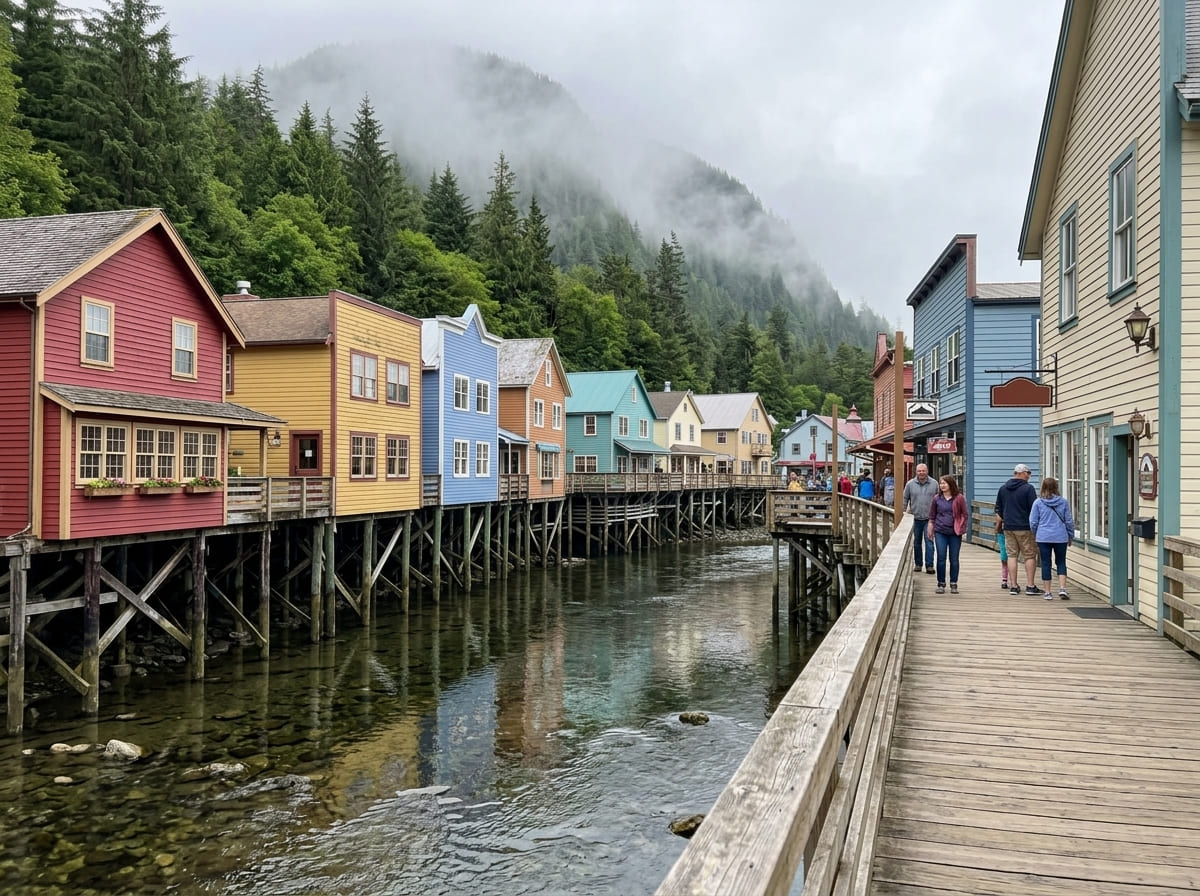
Ships dock right in town along the waterfront, and much of what makes Ketchikan interesting is walkable straight from the pier. Creek Street, the former red light district built on boardwalks over Ketchikan Creek, is one of the most photographed streets in Alaska. The surrounding area offers everything from floatplane adventures to bear watching to world class salmon fishing.
- Pier: Downtown Ketchikan waterfront, with ships docking along the main street
- Currency: US Dollar (domestic port)
- Best for: Totem poles, Creek Street, floatplane tours, Misty Fiords, salmon, rainforest hiking
- Typical time in port: 6 to 8 hours
- Walking distance from pier: Creek Street, the Totem Heritage Center, and downtown shops are all walkable
Top Things to Do in Ketchikan on a Cruise Day
1. Floatplane Tour Over Misty Fiords National Monument
If you do one thing in Ketchikan, make it this. Misty Fiords National Monument, a designated wilderness area of granite cliffs, glacial lakes, and old growth rainforest managed by the Tongass National Forest, is accessible only by floatplane or a very long boat ride. Floatplane tours run 1.5 to 2 hours, fly over the fjords at low altitude, land on a remote alpine lake, and return with a perspective on Southeast Alaska's wilderness that no ground level experience can match. It is the most expensive excursion at this port, roughly $250 to $350 per person, and worth every cent. Book well in advance, since multiple operators run tours but seats fill months ahead on peak days.
2. Creek Street and the Historic District
Creek Street is Ketchikan's most famous landmark, a row of wooden buildings on stilts over Ketchikan Creek, once the town's red light district during the salmon cannery era and now a collection of galleries, shops, and the Dolly's House Museum, the preserved home of Ketchikan's most famous madam. A short walk up the creek during salmon season reveals the remarkable spectacle of coho or pink salmon pushing upstream to spawn, with the creek literally churning with fish. It is free to walk, takes about an hour, and connects straight into the rest of historic downtown.
3. Totem Pole Parks
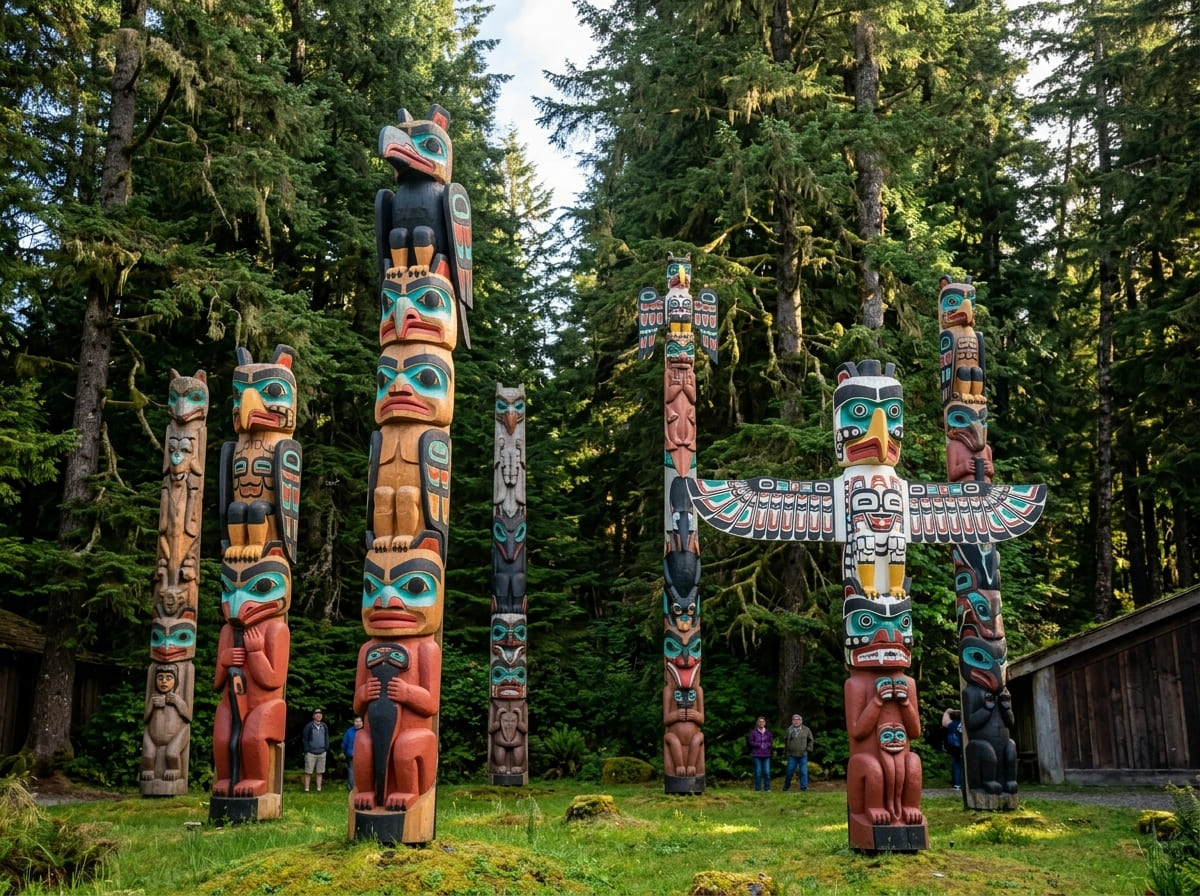
Ketchikan has the world's largest collection of standing totem poles and three dedicated totem pole parks within reach of the cruise pier.
- Totem Heritage Center, downtown and walkable, houses original 19th century poles rescued from abandoned Tlingit and Haida villages, with excellent interpretive context.
- Saxman Totem Park, about 2 miles south, is the largest totem pole park in Alaska, with a working carving shed where you can watch master carvers at work.
- Totem Bight State Historical Park, about 10 miles north, is a reconstructed Tlingit clan house surrounded by poles in a stunning rainforest setting.
Totem poles in Southeast Alaska are not mere decoration. Each tells a specific story of family lineage, historical events, or spiritual significance. Taking even 30 minutes to understand what you are looking at transforms the experience from sightseeing into genuine cultural engagement.
4. Bear Watching and Wildlife Tours
Black bears are common throughout the Ketchikan area, particularly during salmon runs when they gather along streams to feed. Guided bear watching tours by boat or small floatplane take passengers to remote locations where sightings are reliable rather than merely hoped for. Bald eagles are abundant year round, and humpback whales and orcas turn up occasionally in the narrows. A wildlife focused half day tour is one of the better active options for non hikers wanting to see Alaska's fauna up close.
5. Rainforest Hiking
The Tongass National Forest, the largest national forest in the United States, surrounds Ketchikan. Several trails sit within a short distance of the pier, ranging from the easy, paved Rainbird Trail, about a mile long, to the more challenging Deer Mountain Trail, a 3 mile climb with rewarding views. The forest is genuinely extraordinary, with enormous Sitka spruce, western red cedar, and hemlock draped in moss, the sound of ravens overhead, and the smell of rain soaked earth. Wear waterproof layers regardless of the morning forecast.
6. Salmon Fishing
Ketchikan is the Salmon Capital of the World, and that is not just a tourist tagline. The surrounding waters and streams run rich with chinook, coho, pink, and sockeye salmon, and world record halibut have been pulled from nearby waters. Half day and full day fishing charters operate from the small boat harbor right beside the cruise pier. No separate fishing license is required if you use a guide's license, and most charters cover this. If fishing is your thing, this is one of the best ports in Alaska to do it.
7. George Inlet Lodge Crab Feast
A uniquely Ketchikan excursion involves a boat ride into George Inlet to a remote lodge for an all you can eat Dungeness crab feast pulled directly from the inlet. It is indulgent, delicious, and genuinely local. The crabs are cooked fresh and served with butter and local sides in a rustic lodge setting surrounded by rainforest and water. It is one of those experiences that feels specific to this place and this port. Book in advance, since capacity is limited and it is a consistent favorite.
Getting Around Ketchikan
Downtown Ketchikan and Creek Street are walkable from the pier, with no transport needed. Saxman Totem Park is about 2 miles south, roughly a $5 bus ride or a short taxi. Totem Bight is 10 miles north by taxi or excursion bus. Most wilderness excursions depart from the pier area or the floatplane terminal, a few minutes' walk from the ships. The town is small enough that taxis and walking cover most destinations efficiently. To have everything arranged before you sail, book a vetted excursion through our shore excursions partner.
Tips for Your Ketchikan Port Day
- Book the Misty Fiords floatplane months in advance, since it is the best thing in Ketchikan and fills up first.
- Bring waterproof layers regardless of the forecast, because Ketchikan weather changes quickly and the rain is light but persistent.
- Time Creek Street to salmon season, from July to September, when the creek is genuinely full of fish.
- The Totem Heritage Center is free and holds the most historically significant poles, so do not skip it for a paid attraction.
- Ketchikan has shorter port calls than some Alaska ports, with 6 to 7 hours common, so prioritize your top two activities rather than trying to do everything.
- Watch your all aboard time, since Ketchikan's short calls leave little margin, and it is worth knowing what happens if you miss your cruise ship before you book a long excursion.
Plan the Rest of Your Alaska Itinerary
Ketchikan usually sails alongside other Inside Passage stops, so these guides pair naturally with it:
- What to Do in Juneau, Alaska on a Cruise Day
- Skagway, Alaska cruise port guide
- Icy Strait Point, Alaska cruise port guide
- Tracy Arm Fjord scenic cruising guide
- Complete Alaska cruise ports guide
Ketchikan: Frequently Asked Questions for Cruise Passengers
Does it always rain in Ketchikan?
Ketchikan is one of the rainiest cities in the US, averaging around 160 inches of precipitation per year, about three times Seattle's annual total. Rain is a genuine possibility on any visit. That said, it is rarely a hard downpour, more often a light mist or drizzle that a good waterproof layer handles easily. The rain is what creates the extraordinary lush rainforest landscape that makes Ketchikan visually spectacular, so there is a trade off. Pack accordingly and you will be fine.
What are totem poles and what do they mean?
Totem poles are monumental carvings made by Indigenous peoples of the Pacific Northwest Coast, including the Tlingit, Haida, and Tsimshian nations whose ancestral territory includes the Ketchikan area. They are not religious idols. Each pole tells a specific story, such as family crests, historical events, commemorations of people, or legal records of claims. The figures, including ravens, eagles, bears, killer whales, frogs, and humans, represent clan lineages and spiritual connections. Understanding what a pole records makes the experience of viewing them significantly more meaningful.
What is Misty Fiords National Monument?
Misty Fiords is a 2.3 million acre wilderness area east of Ketchikan, designated a National Monument in 1978. It is defined by dramatic granite cliffs rising directly from the water, some over 3,000 feet, glacial fjords, alpine lakes, and old growth temperate rainforest. It is accessible only by floatplane or a 2.5 hour boat ride each way. Floatplane tours from Ketchikan take 1.5 to 2 hours round trip and include a water landing on a remote lake.
What fish can you catch in Ketchikan?
Ketchikan's waters produce five species of Pacific salmon, chinook or king, coho or silver, pink or humpy, sockeye or red, and chum or dog, plus halibut, rockfish, and Dungeness crab. Season affects which species are most active, with king salmon running spring through early summer, coho peaking in August and September, and halibut available throughout the season. Charter guides provide all equipment and typically handle licensing under their guide credentials.