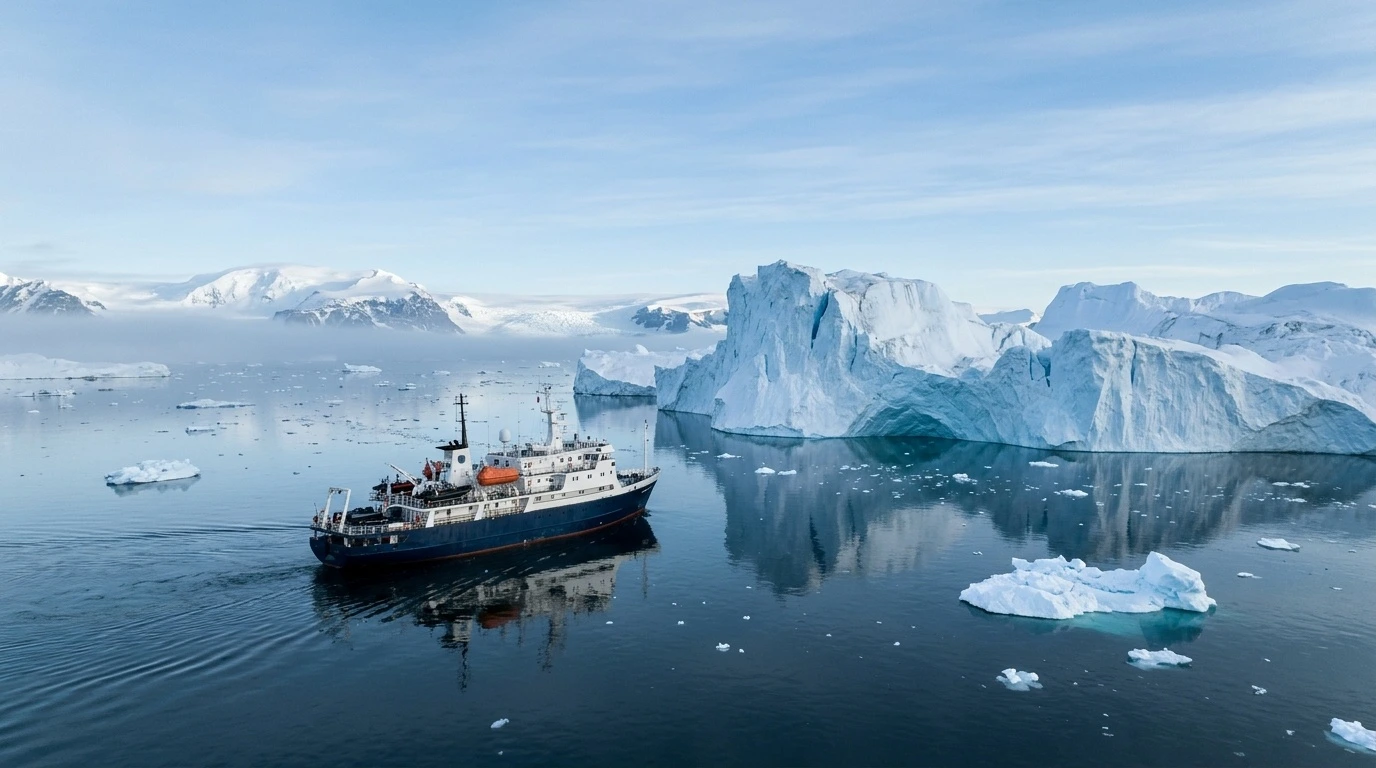
- The Arctic (June–September) features polar bears, walrus, narwhal, and Inuit communities, while Antarctica (November–March) is known for penguins, giant icebergs, and whales—the two poles offer completely different wildlife and experiences.
- Svalbard is generally the easiest and most affordable entry point into polar cruising, whereas Antarctica involves longer voyages, higher costs, and crossing the Drake Passage (about two days each way by sea or a two-hour fly-cruise flight).
- Costs range widely from about $6,000 to $50,000+ per person depending on the ship, cabin, and route, with Arctic Svalbard trips typically on the lower end and full Northwest Passage or luxury Antarctic voyages at the top.
- Timing matters: Antarctica's peak season (December–January) offers the best wildlife viewing but highest prices, while shoulder months like November or March can save money; Arctic routes are busiest from mid-July to mid-August.
Quick answer: Choose the Arctic for polar bears, walrus, narwhal and visits to Inuit communities, with a season that runs roughly June to September. Choose Antarctica for penguins, giant icebergs and whales, with a season that runs roughly November to March. Svalbard is usually the easiest and cheapest way into polar cruising, while Antarctica is the longer, costlier trip that most travelers call the more dramatic one.
Most people planning a polar cruise start with the same question: Arctic or Antarctic? The two ends of the Earth are nothing alike. The Arctic is an ocean ringed by land, and Antarctica is a continent ringed by ocean. That one difference shapes what you see, when you go, what it costs and how you get there.
This guide compares the two poles side by side, then breaks down the main Arctic routes (Svalbard, Greenland and the Canadian Arctic) so you know where to look next. If you are new to cruising in general, our cruise FAQ covers the basics that apply to every ship.
Quick Facts
- Arctic season: roughly June to September, with the Northwest Passage mainly in August and September.
- Antarctic season: roughly November to March.
- Polar bears and penguins: you will never see them together in the wild. Bears live only in the Arctic, and penguins live in the Southern Hemisphere.
- Antarctic landing rules: no more than 100 passengers ashore at one time, and only ships carrying fewer than 500 passengers may land.
- Drake Passage: about two days each way by sea, or about a two hour flight on a fly cruise.
- Typical cost: from about $6,000 to $50,000 or more per person depending on ship and cabin, with many Antarctic Peninsula voyages landing in the middle of that range.
The Quick Answer: Which Pole Should You Pick?
- Want polar bears, walrus, narwhal and Inuit culture? Choose the Arctic.
- Want penguins, huge icebergs and whales? Choose Antarctica.
- Short on time or budget? Svalbard is usually the easiest and least expensive way in.
- Want the most dramatic ice scenery? Most travelers say Antarctica, but Greenland comes close.
Arctic vs. Antarctica at a Glance
| Arctic | Antarctica | |
|---|---|---|
| What it is | An ocean surrounded by land | A continent surrounded by ocean |
| Season | Roughly June to September, with some routes starting earlier | Roughly November to March |
| Headline wildlife | Polar bears, walrus, narwhal, beluga, reindeer, Arctic fox, whales | Penguins, seals, whales, albatross and other seabirds. No land mammals |
| People and culture | Inuit and Greenlandic communities, Svalbard settlements | None. Research stations only |
| Typical trip length | About a week to two weeks, and longer for the Northwest Passage | Commonly 10 to 21 days from South America |
| Getting there | Longyearbyen, Iceland, Greenland or Canada, depending on the route | Ushuaia, Argentina or Punta Arenas, Chile |
| Drake Passage | Not applicable | About two days each way by sea, or fly over it |
Prices vary widely by ship and cabin. One operator guide puts Antarctic cruises at roughly $6,000 to $10,000 for budget cabins, $10,000 to $20,000 for mid range, and $20,000 to $50,000 for luxury. Arctic sailings tend to cost less for a week in Svalbard and far more for a full Northwest Passage voyage. Always check current operator listings, because pricing changes by season. For a way to plan the money side, try our cruise cost guide and budget tool.
When to Go
Both poles are only reachable in their summer, when the sea ice retreats.
Antarctica (November to March)
- November: Fresh snow, courting penguins, fewer ships and often lower prices. Sea ice can limit access in some places.
- December and January: Peak season, with nearly endless daylight and penguin colonies raising chicks. This is also the most expensive time to go.
- February and March: Less snow, more whales as feeding peaks, and chicks starting to fledge. March is a shoulder month that can cost less.
The Arctic (roughly June to September)
- June and July: Midnight sun. Svalbard is strong for wildlife, and Greenland's season gets going.
- Mid July to mid August: Typically the busiest weeks in Greenland.
- August and September: Whale watching, the first chances to see the northern lights, and the main window for the Northwest Passage.
The Main Arctic Routes
Svalbard, Norway
Svalbard is one of the Arctic's best places to look for polar bears from a ship, and it is the easiest route to reach. Flights run to Longyearbyen, and many itineraries last about a week. Expect glaciers, walrus haul outs, seabird cliffs and the chance of bears on the ice or along the shoreline. No wildlife sighting is ever guaranteed, but small expedition ships that circle the archipelago give you the best odds.
Svalbard also has its own rules. Since January 1, 2025, ships carrying more than 200 passengers have been barred from its national parks and nature reserves, and ships and Zodiacs must keep at least 300 meters from polar bears in summer. You can read the details in this overview of Svalbard's 2025 regulations.
Greenland
Greenland is about ice and culture. West Greenland has the enormous icebergs of Ilulissat and coastal towns such as Nuuk, while East Greenland is wilder and more remote, with dramatic fjords. Voyages commonly run about 10 days or longer, and many East Greenland sailings start in Iceland, so a night in Reykjavik before a charter flight is common.
The Canadian Arctic and the Northwest Passage
This is the Arctic with a Canadian angle. Expedition ships visit Inuit communities, tundra and some of the best whale watching in the north, including narwhal, beluga and bowhead. A full Northwest Passage transit is a long voyage, with one operator listing 23 to 29 days, and it is open to expedition ships only in August and September. These are among the most expensive polar trips, and one 25 day listing carried a price near $38,000 per person. Start and end points vary by operator, such as a Greenland to Alaska sailing between Kangerlussuaq and Nome.
Choosing a Ship
Ship size matters more at the poles than almost anywhere else.
- Antarctica: Under the rules of IAATO, the industry association for Antarctic tour operators, no more than 100 passengers can be ashore at one time, only ships carrying fewer than 500 passengers may land, and operators need at least one guide for every 20 visitors. Smaller ships of about 100 to 200 passengers give everyone more time ashore. The IAATO guidelines explain how these limits work.
- Arctic: Smaller expedition vessels of roughly 50 to 150 passengers reach places big ships cannot and offer the most time off the ship. Outside Svalbard's 200 passenger limit for protected areas, there is no single Arctic equivalent of the IAATO landing cap.
- Operators: Check that any Antarctic operator is an IAATO member.
If you would rather see the polar regions from a larger ship, our guide to less crowded cruise ships is a good place to start, though big ships will not make landings in Antarctica.
Getting to Antarctica: Sail or Fly the Drake Passage?
The Drake Passage between South America and the Antarctic Peninsula takes about two days to cross each way. Conditions range from "Drake Lake" (calm) to "Drake Shake" (very rough), so bring seasickness remedies. Our seasickness prevention guide covers what works.
If you would rather skip the crossing, fly cruise itineraries fly from Punta Arenas, Chile to King George Island in about two hours and join the ship there. That saves roughly two days each way, but fly cruises typically cost around 20 percent more than sailing from Ushuaia, and you miss the crossing. Swoop Antarctica's fly cruise guide compares the options.
What to Expect On Board and Ashore
- Zodiac landings and cruising are the core of the day on most itineraries.
- Expert led talks from naturalists and historians fill the time at sea.
- Itineraries are a plan, not a promise. Ice, wind and wildlife all change the schedule.
- Strict biosecurity. You clean boots and gear before every landing, and there are rules on how close you can get to wildlife.
- Layers. Waterproof outer layers, warm mid layers, gloves and good boots matter more than anything else you pack. Many operators lend or rent parkas and boots. Our cruise packing checklist and the list of prohibited items help with the basics, and our post on whether cruise ships get cold at night is a gentle warm up for polar packing.
- Staying connected. Expect limited and slow internet in remote waters. We explain why in how cruise ships get internet.
So Which Should You Choose?
| If you want | Choose |
|---|---|
| Polar bears, walrus or narwhal | Arctic |
| Penguins, leopard seals and humpback whales | Antarctica |
| Visits to Indigenous communities | Arctic (Greenland or the Canadian Arctic) |
| The most iconic polar scenery | Antarctica |
| A shorter, less expensive first trip | Svalbard |
| A once in a lifetime expedition | Northwest Passage or Antarctica |
| To travel from June to August | Arctic |
| To travel from December to February | Antarctica |
Many travelers end up doing both, usually starting with whichever pole matches the time of year they can travel.
Plan the Rest of Your Polar Cruise
- How Much Does a Cruise Really Cost?
- Should I Go On A World Cruise?
- What and How to Pack for a Cruise
- What Happens If You Miss Your Cruise Ship?
- Alaska Cruise Ports Guide for a gentler look at glaciers and wildlife
- A Glacier Bay Cruise Day
- Inside Cabin vs. Balcony
- Cruise Departure Ports
- Alaska and Pacific Northwest Ports
Frequently Asked Questions
Is the Arctic or Antarctica better for a first polar cruise?
It depends on what you want to see. The Arctic offers polar bears, walrus and Indigenous culture, and Svalbard is a relatively easy first trip. Antarctica offers penguins, whales and the most dramatic ice, but the trip is longer and usually costs more.
Can you see polar bears and penguins on the same trip?
No. Polar bears live only in the Arctic and penguins live only in the Southern Hemisphere.
When is the best time to go on an Antarctic cruise?
The season runs from about November to March. November has fresh snow and courting penguins, December and January have the longest days and the most chicks, and February and March bring the most whales.
When is the best time for an Arctic cruise?
Most Arctic expedition cruises sail from about June to September. Svalbard is strong from early to mid summer, Greenland is busiest in July and August, and the Northwest Passage is open to expedition ships mainly in August and September.
How much do polar cruises cost?
Expect several thousand to tens of thousands of dollars per person. Svalbard is usually the least expensive entry point, Antarctica commonly runs from about $6,000 up to $50,000 or more depending on cabin and ship, and full Northwest Passage voyages cost the most. Prices change by ship, cabin and season.
Do I need to cross the Drake Passage to get to Antarctica?
No. Fly cruise itineraries fly you over the passage from Punta Arenas, Chile to King George Island in about two hours, saving roughly two days each way, though they typically cost about 20 percent more.