- A Panama Canal transit is a full day of sailing (8-10 hours for a full transit), not a port stop—your ship does not dock, and you stay on board to watch the locks and lake.
- Full transits cross ocean to ocean through three lock sets and are typically on repositioning or longer cruises, while partial transits (common on round-trip Caribbean sailings) only pass through the Gatun Locks and lake before turning back.
- Expect an early start, often before dawn, so check your ship's daily program the night before and claim a spot on the bow or upper forward open decks for the best views.
- The weather is hot, humid, and sunny with possible rain showers, so bring plenty of water, sunscreen, and plan to spend extended time outdoors on deck.
Quick answer: A Panama Canal transit is a full day of sailing, not a port stop. On a full transit, your ship crosses from one ocean to the other in roughly 8 to 10 hours, passing through three sets of locks and across Gatun Lake. On a partial transit, it climbs through the Gatun Locks, sails into Gatun Lake and turns back. Either way, plan for an early start, a spot on an open deck and plenty of water and sunscreen.
A Panama Canal passage is one of the most fascinating days in cruising. The ship does not dock, and most guests stay on board, but the engineering is the attraction: a huge ship rising and falling in concrete chambers, with the lock walls sliding by just beyond the rail. Knowing what to expect makes a big difference in how much you get out of it.
- What it connects: The Atlantic (Caribbean) side to the Pacific side, in either direction
- Full transit: About 8 to 10 hours, ocean to ocean
- Partial transit: Gatun Locks and Gatun Lake, then back out the way you came. Confirm the details with your cruise line.
- Typical start: Often before dawn, so check your daily program the evening before
- Lock sets: Gatun (Atlantic side), Pedro Miguel and Miraflores (Pacific side)
- Height of Gatun Lake: About 85 feet above sea level
- Best viewing: Open decks, especially the bow and upper forward decks
- Weather: Hot, humid and often sunny. Showers are common in the rainy season.
- Getting off: No disembarkation during the transit itself, apart from optional excursions on some partial transits
Full Transit vs. Partial Transit: This Matters
Clarify this first, because they are very different experiences.
A full transit goes all the way through the canal, entering on one ocean and exiting on the other. Your ship passes through the Gatun Locks, crosses Gatun Lake and the narrow Culebra Cut, then goes down through the Pedro Miguel and Miraflores Locks. Full transit cruises are usually longer itineraries, such as repositioning cruises between the Caribbean and the Pacific coast or world and grand voyages.
A partial transit is common on round trip Caribbean cruises from Florida. The ship enters from the Atlantic side, rises through the Gatun Locks into Gatun Lake, sails for a few hours, turns around and returns the same way. You experience real locks and the lake, but you do not cross to the Pacific. On some partial transits, guests can book an excursion that lands at Gamboa for a rainforest or wildlife tour and rejoins the ship later. Our Gatun Lake cruise port guide covers that stop in more detail.
Full vs. Partial at a Glance
| Feature | Full transit | Partial transit |
|---|---|---|
| Route | Ocean to ocean | In and out on the same side |
| Locks | Gatun, Pedro Miguel, Miraflores | Gatun only, up and back down |
| Gatun Lake | Crossed fully | Entered, then turn around |
| Time | About 8 to 10 hours | Shorter, varies by ship and schedule |
| Typical cruise | Repositioning and long itineraries | Round trip Caribbean itineraries from Florida |
How the Locks Work
The canal lifts ships about 85 feet up to Gatun Lake and lowers them again on the other side, using water filled chambers called locks. On a Caribbean to Pacific full transit, the sequence looks like this:
- Gatun Locks: On the Atlantic side. A three step flight of chambers lifts the ship up to the level of Gatun Lake. This is where partial transits enter and later come back down.
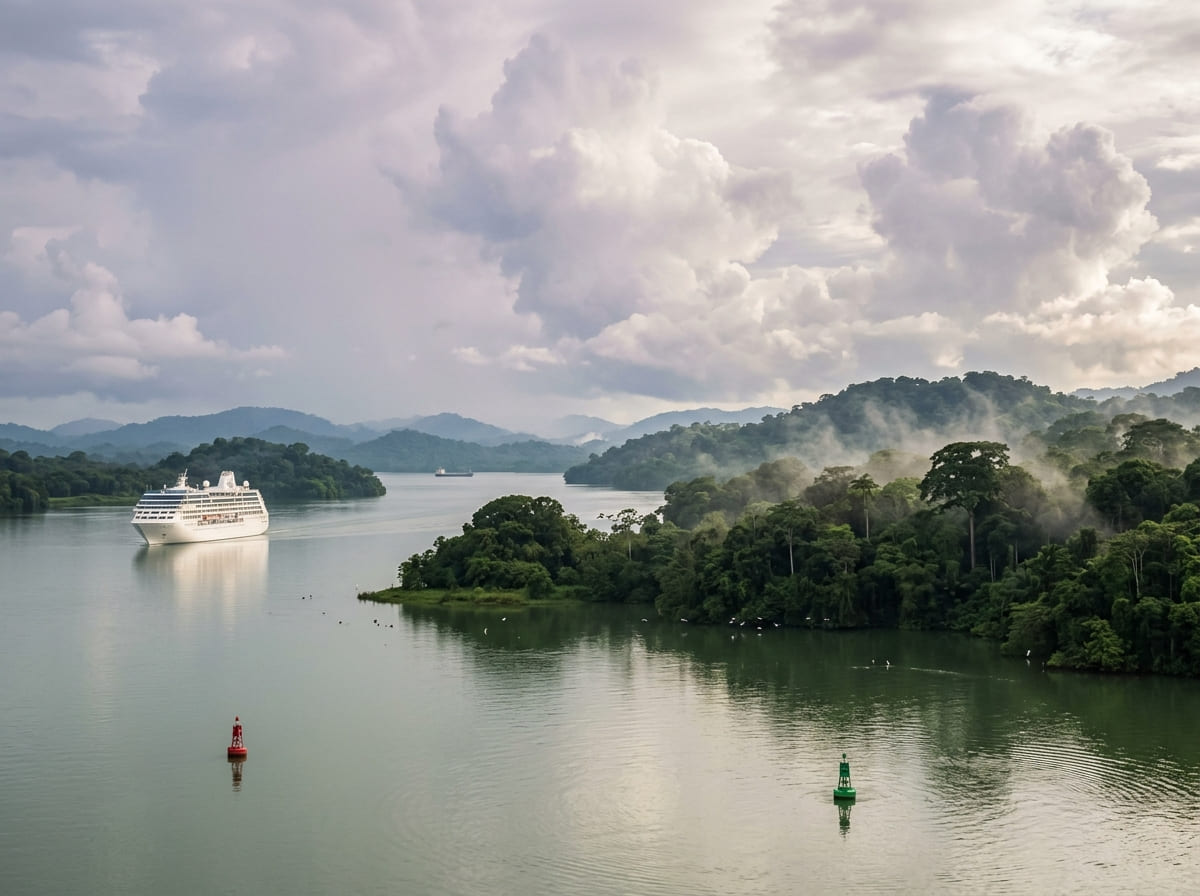
- Gatun Lake: A huge lake created in the early 1900s when the Chagres River was dammed. The quiet middle stretch has forested islands, birds and a feeling of floating through jungle.
- Culebra Cut: A narrow channel cut through the continental divide, one of the most dramatic parts of a full transit.
- Pedro Miguel Locks: Begin the descent toward the Pacific.
- Miraflores Locks: The final locks before the Pacific side. A visitor center on the bank draws spectators, and you can often see them from the deck.
The Expanded Locks (Since 2016)
In 2016, the Panama Canal opened a second, larger set of locks: Agua Clara on the Atlantic side and Cocolí on the Pacific side. These Neopanamax locks handle much bigger vessels than the original locks, which date to 1914. Which set your ship uses depends on its size and the Canal Authority's scheduling, so check with your cruise line if you want to know.
What Happens on Board
The day usually starts very early. For a Caribbean side entry, the ship often approaches the first locks around dawn or before. Expect announcements from the bridge, and check your daily program the night before for exact times. The deck fills up fast.
A Panama Canal Authority pilot boards to direct the ship's navigation through the canal, working with the ship's own officers. Bridge commentary often explains what is happening.
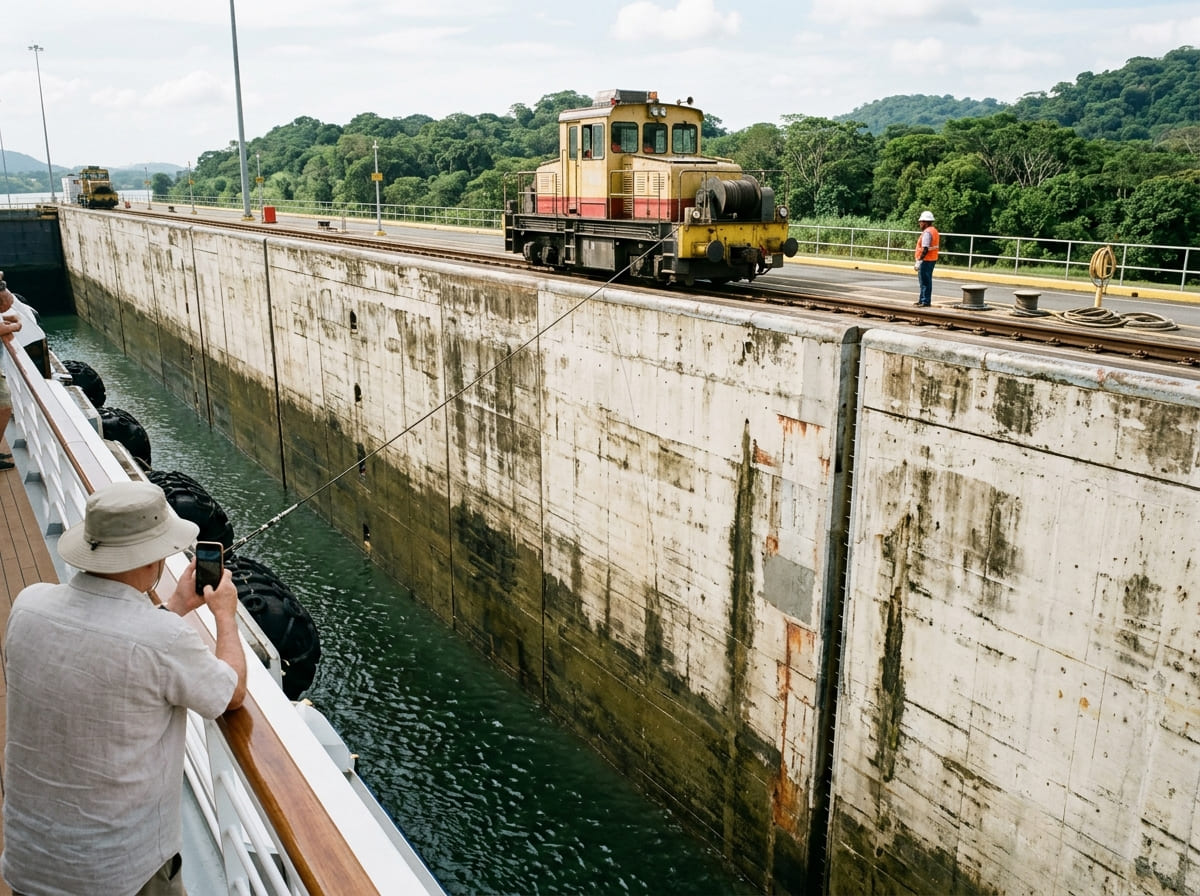
Inside the original locks, electric locomotives called "mules" run on tracks along the lock walls and are attached to the ship by cables. Their job is to keep the ship centered and controlled as the chamber fills or empties, not to tow it. The newer Neopanamax locks use tugboats rather than mules.
The ship moves slowly because it has to. In the original locks, the gap between the hull and the concrete is only a couple of feet on each side for the biggest ships that fit. You can watch the walls slide past just beyond the rail.
Where to Watch From
- The bow: The best spot for approaching each chamber. You watch the gates open ahead and the ship edge forward into the lock.
- The stern: Good for watching the gates close behind you and the water level change.
- Upper open decks: Better elevation and a wider sense of the locks and landscape.
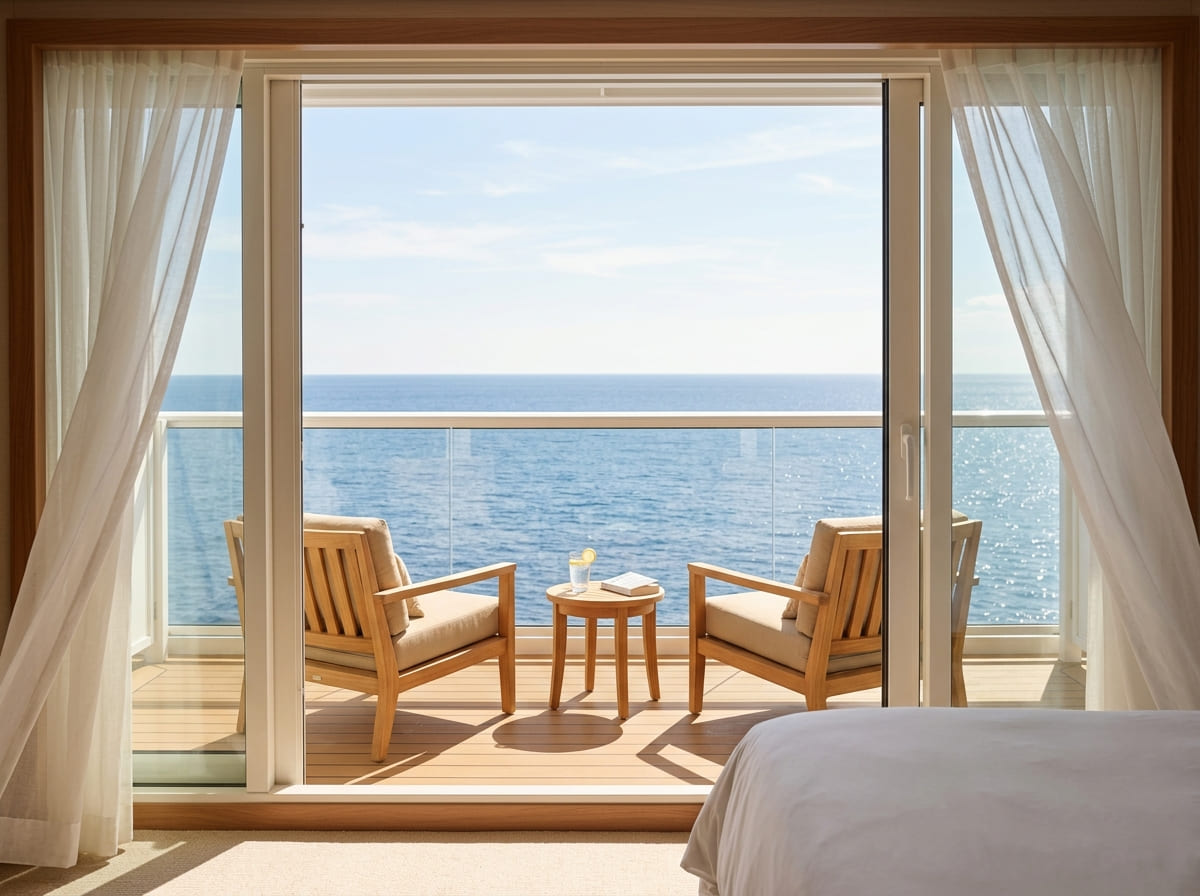
Pool decks are often crowded. The bow and stern may look less scenic but give the clearest view of what the ship is doing. Arrive early for the first lock entry. Many ships also show a live canal camera on cabin TVs, which is handy during the long lake crossing, though the lock entries are best seen in person. If you have a balcony, you can watch from there, but you will only see one side. Our guide to inside cabin vs. balcony explains when that upgrade pays off.
A Typical Full Transit Day
Times vary with canal traffic and the lock schedule, which the Canal Authority controls. A rough Caribbean to Pacific day looks like this:
- Before and around dawn: Pilot boards, ship approaches the Gatun Locks
- Morning: Climb through the three Gatun chambers
- Late morning to afternoon: Crossing Gatun Lake and the Culebra Cut
- Afternoon: Pedro Miguel and Miraflores Locks
- Late afternoon: Exit into the Pacific, often passing under the Bridge of the Americas
A partial transit is shorter and covers the Gatun Locks, part of the lake and the return trip. Check your ship's daily schedule for the real times.
Onboard Programming
Most ships treat transit day seriously. Expect commentary from the bridge, a guest lecturer or Panama Canal expert on some itineraries, history programming on the ship's channels and regular updates from the cruise director. The quality varies by line, but the information is generally good.
Practical Tips
- Sunscreen and water: The canal zone is hot, humid and sunny. A hat helps too.
- Rain gear: The wet season runs roughly from May through December, and showers can pass through quickly.
- Binoculars: Good for lock details, distant gates and birds on Gatun Lake.
- Charged camera or phone: You will take more photos than you expect.
- Set an alarm: The first lock entry happens early and is one of the most memorable parts of the day.
- Consider motion: The canal itself is calm, but longer sailings include open ocean days, so see our seasickness guide.
- Stay connected: Our cruise ship WiFi guide helps you decide whether a package is worth it for sharing photos.
Ports Before and After the Canal
Panama Canal itineraries often include other stops. On the Caribbean side you might see Santa Marta, Colombia, Willemstad, Curaçao or Oranjestad, Aruba. On the Pacific side, Puntarenas, Costa Rica and Mexican ports such as Huatulco, Acapulco, Puerto Vallarta and Cabo San Lucas are common. Browse every stop on the Caribbean cruise ports page, and see what to do in Puerto Vallarta and Ensenada.
Many Panama Canal cruises depart from Port Everglades or Miami, and Pacific side itineraries often start or end at San Pedro (Los Angeles) or San Diego. If you are comparing sailings, our cruise search and budget calculator can help.
Plan the Rest of Your Panama Canal Cruise
- Gatun Lake cruise port guide
- Caribbean cruise ports
- Inside cabin vs. balcony: which is worth it?
- What a guaranteed cabin is
- How cruise onboard credit works
- How to prevent seasickness on a cruise
- Cruise ship WiFi guide
- What to expect on disembarkation day
- Shore excursions
- Cruise FAQs
For official information about the waterway, visit the Panama Canal Authority website.
Frequently Asked Questions
What is the difference between a full and partial Panama Canal transit on a cruise?
A full transit goes all the way from one ocean to the other, through all three lock sets and across Gatun Lake. A partial transit goes up through the Gatun Locks, sails into Gatun Lake and returns the way it came, without crossing to the other ocean. Confirm which one your sailing includes.
Can you get off the ship during a Panama Canal transit?
Not during the transit itself. Passengers stay on board while the ship moves through the canal. Some partial transits offer an optional excursion that lands at Gamboa and rejoins the ship, and some itineraries add a port call at either end as a separate day.
How long does it take a cruise ship to go through the Panama Canal?
A full transit takes about 8 to 10 hours. A partial transit is shorter and depends on the ship's schedule and lock timing. Waiting for a lock slot can add time, so rely on your ship's daily program.
Which side of the ship is best for viewing the Panama Canal?
Neither side has a consistent advantage. The best spots are the bow for approaching the lock chambers and the stern for watching the gates close behind you. Upper open decks give a good overall view. A balcony works, but it shows only one side.
What time do cruise ships enter the Panama Canal?
Entry is often very early, around dawn or before, but the exact time depends on canal traffic and your ship's assigned transit window. Check the daily program the evening before.
What is the weather like during a Panama Canal cruise?
It is hot, humid and often sunny, with showers common during the rainy season from roughly May through December. Bring sunscreen, a hat, water and light rain gear.